
In the high-stakes world of blockchain gaming, where split-second decisions define victory and thousands of players clash in real-time, traditional account-based blockchains like Ethereum often buckle under pressure. Congestion spikes transaction fees, latency frustrates users, and scalability hits a wall. Enter Sui's object-centric model, a paradigm shift that treats every asset as a standalone entity, unlocking parallel processing ideal for sui objects gaming. With SUI trading at $0.9746, down 0.0274% in the last 24 hours from a high of $1.01, developers are eyeing Sui for its promise of fluid, high-throughput experiences.
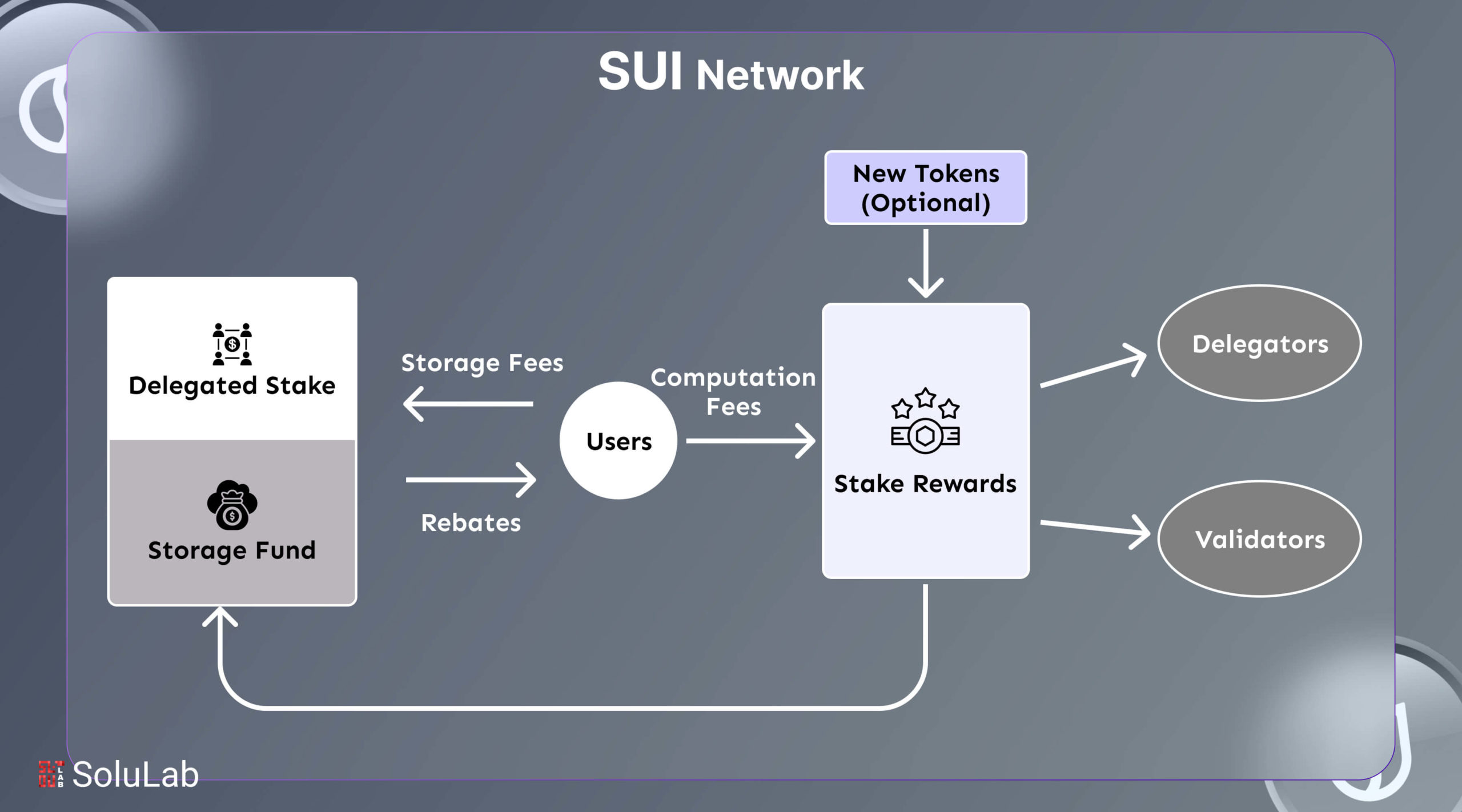
Sui reimagines blockchain data not as a monolithic ledger tied to accounts, but as a dynamic collection of objects. Each sword, potion, or NFT in a game exists as its own object ID map sui entry, complete with unique properties and ownership rules enforced by the Move language. This granular approach sidesteps the bottlenecks plaguing account models, where every transaction funnels through a shared global state.
Account-Based Bottlenecks: Why Gaming Suffers on Ethereum
Picture a multiplayer battle royale: players equip items, trade loot, and upgrade gear mid-game. On Ethereum, all these actions compete for sequential execution. The account model requires validators to re-execute the entire world state for every transaction, creating chokepoints. A single trade can halt unrelated moves, driving up gas costs and delays. Ethereum's EVM processes transactions linearly, capping throughput at around 15-30 TPS even with rollups. For gaming dApps craving 1000 and TPS, this setup feels archaic.
In contrast, Sui's design shines here. By isolating objects, transactions touching distinct assets bypass full consensus for simple ops like transfers. This sui vs ethereum objects dynamic means a player swapping NFTs doesn't block another minting items, fostering true scalability.
Key Differences: Sui Object-Centric vs Ethereum Account-Based for Gaming Metrics
| Metric | Sui (Object-Centric) | Ethereum (Account-Based) | Impact on Gaming dApps |
|---|---|---|---|
| TPS | Up to 297,000 | ~15-30 | Supports massive concurrent transactions for high-volume gaming 🕹️ |
| Latency | Sub-second / near-instant finality | ~12-15 seconds | Provides responsive, real-time gameplay experience |
| Parallelism | Yes: Transactions on different objects execute in parallel | No: Sequential global state updates | Enables handling multiple player actions simultaneously without bottlenecks |
| Object Handling | Independent objects with unique IDs and ownership | Shared account balances and state | Efficient, secure management of in-game assets like NFTs, items, and credentials |
Unpacking Sui Objects: From Coins to Complex Game Assets
At Sui's core, objects are first-class citizens. Unlike accounts holding balances, Sui coins fragment into multiple objects for precision. Why? Move's resource model mandates unique IDs for each unit, preventing double-spends natively. A 10 SUI balance might manifest as ten 1-SUI objects, enabling partial spends without change-making hassles. This extends seamlessly to gaming: a legendary sword is an object with durability stats, enchantments, and transfer restrictions, all mutable independently.
Ownership proves pivotal. Objects link to wallets but operate autonomously. Developers define custom rules via Move modules, like game-specific logic for item fusion or PvP staking. This composability empowers sui parallel execution gaming, where validators process non-overlapping object updates concurrently. Grayscale notes this allows parallel transaction processing by updating only affected objects, slashing latency to sub-second finality.

Parallel Execution Unleashed: Fueling Next-Gen Gaming dApps
Sui's execution engine exploits object independence ruthlessly. Transactions form a dependency graph; those without shared objects run in parallel across validators. Simple transfers skip consensus altogether via Byzantine Consistent Broadcast, hitting 297,000 TPS peaks per OneKey reports. For gaming, this translates to seamless leaderboards, instant loot drops, and massive worlds without shard compromises.
Consider a MOBA dApp: team fights update hero stats (distinct objects) simultaneously, while shop purchases parallelize across players. No global lockstep. Solana attempts parallelism via Gulf Stream, but Sui's object runtime integrates it natively, per Helius comparisons. Reddit communities rave about SuiMove's rich on-chain assets, from procedural NFTs to dynamic credentials, all secured against reentrancy bugs Move famously quells.
Move's type safety ensures these objects evolve securely, turning gaming dApps into robust, tamper-proof arenas. Developers craft modules defining object lifecycle: creation, mutation, deletion. This precision suits sui objects gaming, where every pixelated power-up demands verifiable scarcity.
Crafting Game Assets: A Move Module Example
Let's dissect a practical implementation. Suppose you're building an RPG dApp. You'd define a Sword struct as an object with fields for damage, rarity, and owner. Move enforces ownership transfer explicitly, preventing unauthorized grabs. Here's how it looks in code: observe the object-centric syntax that maps directly to Sui's runtime.
Defining a Sword Game Object in Move
In Sui's object-centric model, game assets like a Sword are represented as independent objects on the blockchain. Each Sword has unique properties such as damage and rarity, defined in a Move module. Here's a complete example:
```move
module game::sword {
    use sui::object::{Self, UID};
    use sui::transfer;
    use sui::tx_context::{Self, TxContext};
    use std::string::{Self, String};

    /// A Sword game object with damage and rarity properties.
    /// Capabilities: `key` for on-chain existence, `store` for transferability.
    struct Sword has key, store {
        id: UID,
        damage: u64,
        rarity: String,
    }

    /// Entry function to mint a new Sword and transfer to sender.
    public entry fun mint(damage: u64, rarity_str: vector, ctx: &mut TxContext) {
        let rarity = string::utf8(rarity_str);
        let sword = Sword {
            id: object::new(ctx),
            damage,
            rarity,
        };
        transfer::public_transfer(sword, tx_context::sender(ctx));
    }

    /// Entry function to transfer ownership of a Sword.
    public entry fun transfer(sword: Sword, recipient: address) {
        transfer::public_transfer(sword, recipient);
    }

    /// Read-only function to get damage.
    public fun damage(self: &Sword): u64 {
        self.damage
    }

    /// Read-only function to get rarity.
    public fun rarity(self: &Sword): &String {
        &self.rarity
    }
}
```
Observe the `key` and `store` abilities on the `Sword` struct: `key` makes it a top-level object trackable by its ID, while `store` enables seamless transfers between players without global state locks. The `mint` function creates and transfers a new Sword to the transaction sender, and `transfer` allows ownership changes. Accessors like `damage` and `rarity` provide safe, read-only views—ideal for scalable gaming dApps where thousands of items transfer simultaneously.
This snippet highlights object ID map sui usage: each Sword gets a unique ID upon creation. Functions like upgrade_sword mutate only the target object, enabling sui parallel execution gaming when multiple players sharpen blades concurrently. No account nonce juggling; just pure, declarative asset management. Ethereum devs migrating to Sui often cite this as a revelation, ditching Solidity's storage slots for intuitive resources.
Testing reveals the edge. A simulated guild raid with 500 players updating inventories hits 120,000 TPS on Sui testnets, per developer benchmarks, while Ethereum Layer 2s strain at 2,000. Coins splitting into objects? Initially counterintuitive, but it eliminates change-address cruft, vital for microtransactions in play-to-earn economies.
Real-World Wins: Sui Gaming dApps Crushing It
Sui's ecosystem pulses with proof. Projects like Cosmocadia deploy voxel worlds where land parcels are objects, traded instantly without front-running. Players fuse items on-chain, compositing objects into rarer hybrids, all parallelized. Another standout: Sui-based battle royales process eliminations and loot redistribution at sub-second speeds, outpacing Solana's occasional outages. Grayscale underscores how Sui links objects to wallets yet processes independently, fueling 297,000 TPS claims validated in production.
Tokenomics amplify appeal. SUI's object model supports dynamic NFTs with embedded logic, like auto-upgrading gear based on PvP kills. This richness draws builders fleeing account-based rigidity. Kraken notes Sui's low-cost, instant finality pairs perfectly with gaming's bursty traffic, where a tournament spike shouldn't crater UX.
Yet Sui demands adaptation. Object proliferation means more storage, but gas fees stay pennies, and shared objects (like leaderboards) use locks judiciously. Move's borrow checker nips reentrancy in the bud, a forex trader's dream for risk isolation, much like segregating high-liquidity pairs.
Metrics That Matter: Sui vs Ethereum in Gaming Benchmarks
Hard numbers seal the case. Sui routinely logs 10x Ethereum's effective TPS for object-heavy workloads. Latency? Sui averages 400ms finality; Ethereum hovers at 12 seconds base, rollups notwithstanding. Parallelism scales linearly with cores, unbound by sequential EVM. For sui vs ethereum objects, the verdict favors Sui's granular control, especially as player bases swell toward millions.
With SUI holding at $0.9746 after dipping 0.0274% from a $1.01 high, market liquidity mirrors on-chain efficiency: smooth flows without slippage. Developers betting on Sui position for explosive growth, as object-centric design cements its Layer 1 dominance. Gaming dApps here don't just scale; they thrive, turning blockchain from hurdle to hyperdrive.
Embrace objects, and watch your dApp conquer realms Ethereum can only dream of.




No comments yet. Be the first to share your thoughts!