Porting Ethereum Smart Contracts to Sui Object Model

Porting Ethereum smart contracts to the Sui object model demands more than syntax tweaks; it requires rethinking how we handle state, ownership, and scalability in blockchain applications. Ethereum’s account-based world, powered by Solidity, has served DeFi well, but its sequential execution hits limits as adoption grows. Sui’s object-centric approach, built on Move, flips this script by treating assets as distinct objects with explicit rules. For institutional players eyeing sustainable DeFi, this ethereum to sui migration unlocks parallel processing and verifiable safety, positioning projects for real-world scale without the hype.

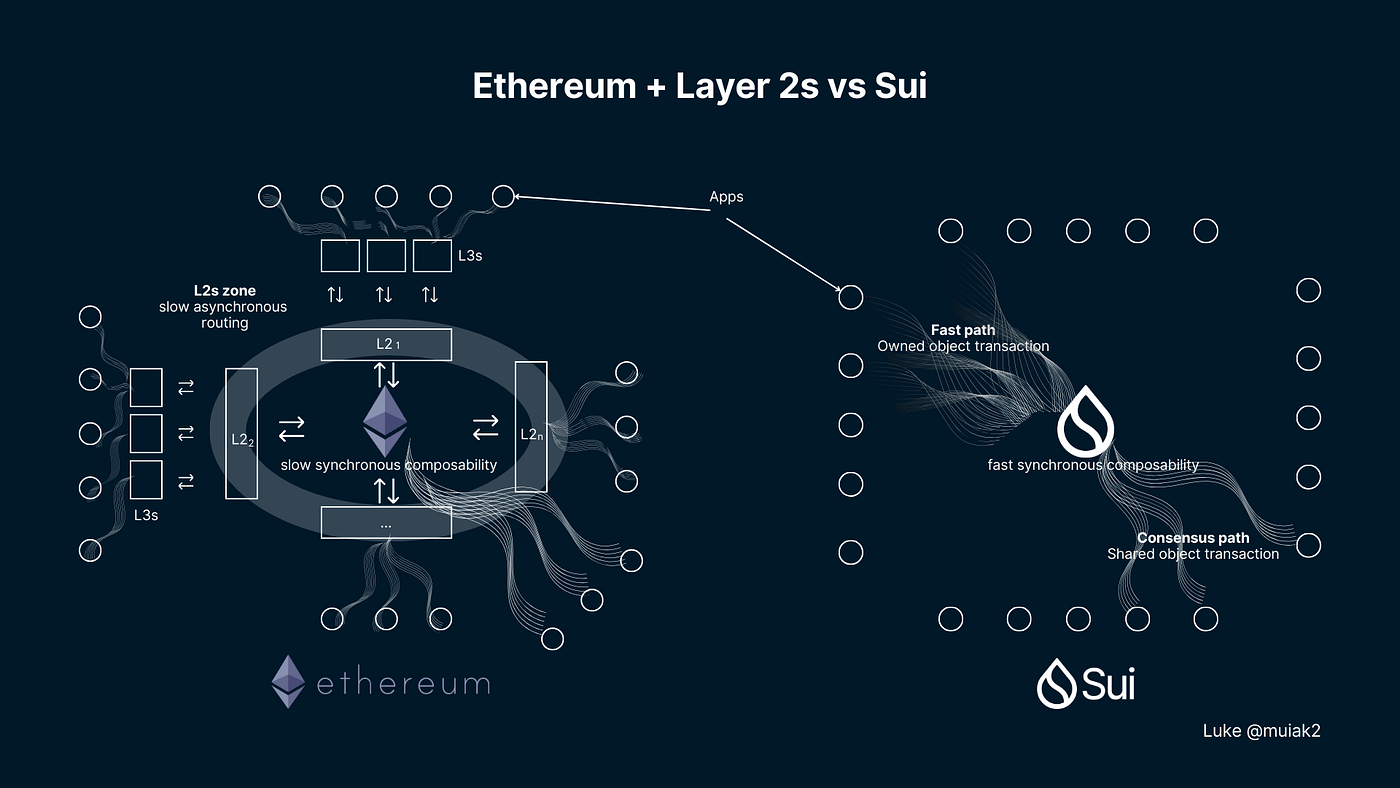
Sui’s design resonates with my 15 years analyzing macro trends: value accrues to architectures that manage complexity efficiently. Ethereum contracts bundle state in global mappings, risking contention and gas wars. Sui objects, each with unique IDs, enable independent mutations. This isn’t flashy; it’s conservative engineering for high-throughput DeFi.
Core Differences Driving Sui Move Porting Challenges
The shift from Solidity to Move marks the first hurdle in object centric contracts. Solidity lets developers mutate storage freely within contracts, but Move enforces resource semantics: assets can’t be duplicated or lost, thanks to linear types. Ethereum transactions queue up, bottlenecking at peak times; Sui’s object model allows parallel execution for non-overlapping objects, slashing latency.
Ownership flips too. In EVM sui refactor efforts, developers often overlook Sui’s capability-based access. Holding a key object grants permissions, sidestepping Ethereum’s modifier clutter. This reduces attack surfaces, a boon for audited institutional code.
Key Differences: Ethereum Solidity vs Sui Move
| Feature | Ethereum | Sui |
|---|---|---|
| State Management | Managed within contracts through mappings and storage variables in a global state. | Encapsulated within objects with unique identifiers, explicit ownership, and mutability rules. |
| Ownership | Access control implemented through role-based mechanisms within contracts. | Inherent object ownership and capability-based access control, where possession of objects grants permissions. |
| Execution Model | Sequential transaction processing, leading to bottlenecks. | Parallel transaction execution for independent objects, enhancing scalability. |
| Language Safety | Solidity: Imperative language susceptible to vulnerabilities like reentrancy. | Move: Resource safety, linear types, and verifiability by design. |
“Sui’s object model isn’t a gimmick; it’s a response to Ethereum’s scaling pains, prioritizing verifiability over flexibility. “
Learning Move Syntax for Ethereum Veterans
Solidity developers diving into sui move porting start with Move’s module system. Contracts become modules defining structs as objects. No more mapping(address leads to uint); instead, declare struct Balance has key { id: UID, value: u64 }. Resources live in storage only when owned, vanishing if dropped – a safety net Solidity lacks.
Functions specify abilities like key for persistent objects or store for shared access. Entry functions, Sui’s public callers, replace Solidity’s external ones, integrating with programmable transaction blocks (PTBs) for atomic multi-step ops. Tutorials like CertiK’s Move for Solidity Developers highlight ERC20 parallels: Sui’s transfer uses object passing, not balances.
Practice by forking Sui’s coin module. Deploy a simple token: define Coin
Redesigning Data Structures for Object Ownership
Ethereum’s contract-centric storage crumbles under Sui’s rules. Mappings become dynamic fields or tables in objects. For a DEX, Ethereum pools state in one contract; Sui spawns Pool objects per pair, each owning reserves as child objects. Updates mutate specific objects, enabling parallelism.
Access control evolves: Sui’s parent-child hierarchies and capabilities replace roles. A Vault object holds AdminCap; only its owner shares or uses it. This explicit model cuts reentrancy risks, vital for DeFi ports. During evm sui refactor, map Ethereum events to Sui’s events on objects for indexing.
Programmable transaction blocks shine here. Chain commands like make_transfer leads to assert_balance leads to split_object in one tx, with gas sponsored separately. Ethereum devs must unlearn calldata; Sui uses pure commands on objects.
Object flows demand precision. A simple ERC20 transfer in Solidity deducts from sender’s balance mapping and adds to receiver’s, all in one contract call. Sui requires passing the actual Coin object or splitting it, enforcing visibility and preventing ghost balances. This rigor pays dividends in audited environments, where I’ve seen Ethereum exploits trace to unchecked mutations.
Practical Porting: ERC20 Token to Sui Coin
Let’s ground this in a real-world ethereum to sui migration: porting an ERC20 token. Ethereum’s standard relies on a central contract tracking balances via mappings. Sui’s Coin
Side-by-Side: ERC20 transferFrom vs. Sui coin::transfer
A fundamental difference in porting ERC20 logic to Sui lies in token transfers. Ethereum’s `transferFrom` relies on an allowance system where spenders are pre-approved by owners. Sui’s `coin` module, however, uses direct object transfer, as Coins are owned objects that must be possessed by the caller to transfer.
Solidity ERC20
transferFromfunction transferFrom( address from, address to, uint256 amount ) public virtual override returns (bool) { address spender = _msgSender(); _spendAllowance(from, spender, amount); _transfer(from, to, amount); return true; }Sui Move
coin::transferpublic fun transfer<T>(coin: Coin<T>, recipient: address, ctx: &mut TxContext) { transfer_to_address(coin, recipient, ctx); }This approach in Sui Move simplifies the code by removing allowance checks and updates, relying instead on Move’s linear type system for safe ownership transfer. It reduces complexity but requires careful handling of object lifecycle in the broader contract design.
The Sui equivalent leverages transfer on Coin objects. Caller splits a Coin into exact amounts, transfers one portion, and merges leftovers. This object passing replaces balance math, reducing errors. CertiK’s analysis shows ERC20 holders approve spends; Sui uses object sharing or capabilities for allowances, tighter by design.
For DEX ports like Uniswap, spawn Pool objects dynamically. Reserves become child Balance objects under Pool ownership. Swaps mutate reserves in parallel if pairs don’t overlap, a scalability leap Ethereum forks chase via L2s. My macro lens sees this as Sui’s edge for institutional DeFi: predictable throughput without rollup fragmentation.
Leveraging Programmable Transaction Blocks for Complex Logic
PTBs elevate sui move porting beyond single calls. Ethereum bundles via multicall libraries, but Sui natively chains commands atomically: transfer object, update pool, emit event, all succeeding or reverting together. Gas refunds for unused steps add efficiency, absent in EVM.
Consider a flash loan port. Ethereum sequences borrow, use, repay in one tx; Sui scripts PTB with pure commands on independent objects. Sponsors pay gas upfront, enabling gasless user ops – a conservative win for UX without central relays.
Sui’s PTBs aren’t bells and whistles; they architect reliability into DeFi primitives, sidestepping Ethereum’s revert roulette.
Testing, Auditing, and Deployment Best Practices
Rigorous testing anchors evm sui refactor. Sui’s Move Prover verifies modules mathematically, catching overflows Solidity audits miss. Write unit tests in Move’s suite, simulating object states. For integration, Sui Testnet mirrors Mainnet, with faucets for SUI.
Deployment uses Sui CLI or SDKs. Publish modules, upgrade via on-chain governance if needed. Tools like Move Analyzer flag anti-patterns early. Post-port, benchmark: expect 10x TPS gains on non-conflicting txs, per Sui docs.
Institutional adoption favors this verifiability. As a CFA tracking macro shifts, Sui’s object centric contracts align with compliance needs: clear ownership trails for regulators, parallel scale for volume. Ethereum’s path led to L2 silos; Sui consolidates.
Mastering these shifts transforms ports from chores to optimizations. Start small – a token contract – scale to full DEX. Resources like Sui’s Move book and CertiK guides accelerate the curve. The value lies in execution: time building on Sui beats chasing Ethereum’s next upgrade.