
Object-centric architecture limits to account for
Object-centric architecture shifts the focus from flat data tables to discrete, identifiable entities. Instead of treating data as a stream of records, this approach models each real-world item—like a customer, product, or transaction—as a distinct object with its own lifecycle, attributes, and relationships. This structure is essential for building autonomous data mesh systems, where individual data domains need to operate independently while remaining interoperable.
The core constraint here is disentanglement. In traditional architectures, data points are often entangled, making it difficult to isolate the properties of a single entity without pulling in irrelevant noise. Object-centric designs use weak supervision from sparse perturbations to separate these properties. As research by Mansouri et al. demonstrates, this allows the system to efficiently learn causal representations by treating each object's features as independent variables.
Implementing this requires a strict definition of object boundaries. You must decide what constitutes a single object versus a collection. For example, a "user" object should encapsulate their profile, preferences, and recent activity, but not their entire historical order log, which belongs to an "order" object. This separation prevents data bloat and ensures that changes to one domain do not cascade unpredictably into others. The goal is modularity: each object should be self-contained enough to be understood, updated, and queried without context from the wider mesh.
Object-centric architecture choices that change the plan
Moving from standard data mesh to object-centric autonomy requires balancing flexibility against complexity. You are trading rigid schema enforcement for dynamic, behavior-driven data structures. This shift impacts how teams manage governance, query performance, and integration costs.
Evaluate these factors before committing to the new pattern.
| Factor | Object-Centric | Traditional Mesh | Tradeoff Impact |
|---|---|---|---|
| Schema Flexibility | Dynamic, behavior-defined | Rigid, table-defined | Higher dev velocity, lower governance overhead |
| Query Complexity | Requires graph traversal | Standard SQL joins | Steeper learning curve, richer relationships |
| Data Governance | Decentralized, object-level | Centralized, domain-level | Harder audit trails, more ownership clarity |
| Integration Cost | High initial setup | Moderate, established patterns | Long-term ROI depends on scale |
The primary benefit is autonomy. Each object encapsulates its own logic and state, reducing cross-domain dependencies. However, this comes at the cost of query complexity. You cannot rely on simple SQL joins; you must traverse object relationships.
Governance also shifts. Instead of policing entire domains, you enforce rules at the object level. This makes audits harder but clarifies exactly who owns what data. The initial integration cost is high, but the long-term ROI improves as the system scales and decouples.
How to choose your next step in object-centric architecture
The shift from data mesh to autonomous data mesh isn't about buying new tools; it's about changing how your systems perceive data. Object-centric architectures offer a way to handle this by treating data as independent, causal entities rather than static rows in a table. This approach allows for better disentanglement of properties and more efficient causal representation.
If you are evaluating this evolution, use this checklist to determine if your organization is ready to move beyond traditional mesh principles.
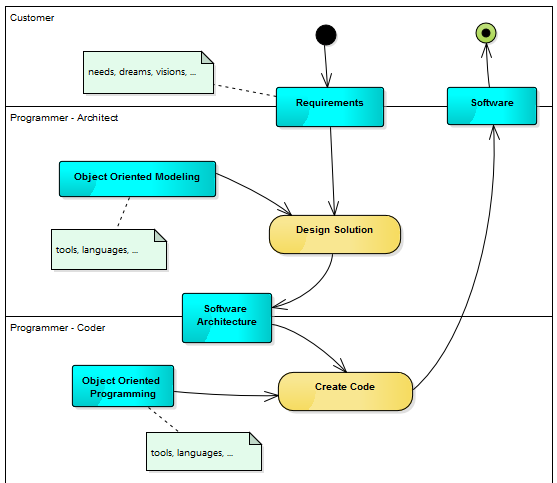
Start by mapping your existing data products. Identify which data assets are tightly coupled to specific applications or pipelines. Object-centric architecture thrives when data can be isolated and manipulated independently. If your current mesh relies heavily on shared, monolithic tables, you will need to refactor these into discrete, self-describing objects before automation can take over.
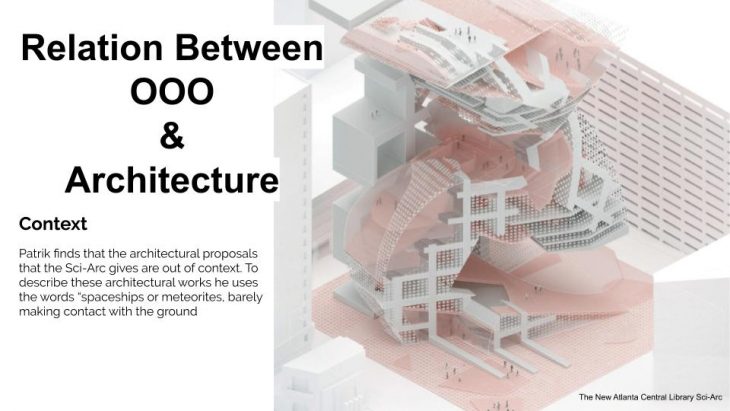
Traditional data mesh focuses on domain ownership. Autonomous mesh requires causal clarity. For each data object, define what causes changes in its state and what effects it produces. This mirrors the research on weak supervision from sparse perturbations, where disentangling properties is key. If you cannot clearly articulate the causal chain for your core data entities, the automation layer will likely introduce errors rather than efficiencies.
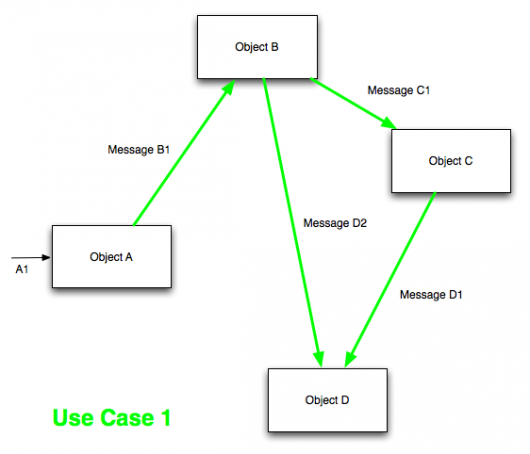
You don't need perfect, labeled data to start. Leverage sparse perturbations to test the robustness of your data objects. Apply weak supervision techniques to automatically validate that objects maintain their structural integrity and causal relationships even when input data is noisy. This step is critical for moving from a passive mesh to an autonomous one that can self-correct.
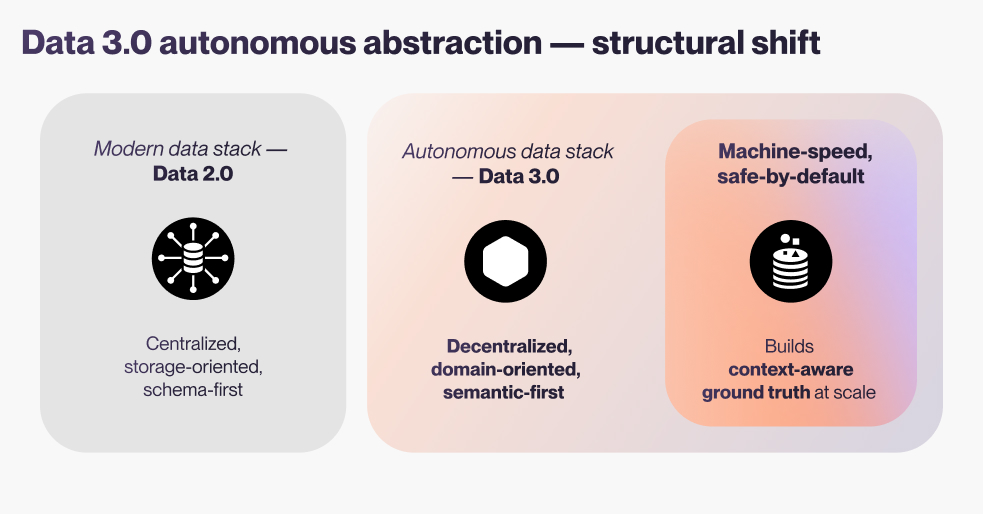
Once objects are well-defined and validated, automate the governance layer. Instead of manual reviews for every data change, deploy policies that react to causal violations. The system should automatically flag or quarantine data objects that deviate from their expected causal behavior, reducing the operational burden on your data engineers.
Spotting Weak Options in Data Mesh Claims
Many vendors treat "autonomous" as a buzzword rather than a structural shift. Before committing to a new platform, check whether the underlying architecture actually supports object-centric reasoning. Without it, data mesh implementations often collapse back into centralized bottlenecks.
Look for weak options that promise full automation but lack the necessary disentanglement. Research shows that object-centric architectures leverage weak supervision from sparse perturbations to separate object properties effectively [1]. If a vendor's solution cannot demonstrate this level of causal representation, it is likely just a rebranded data lake.
Common mistakes include ignoring the tradeoff between simplicity and autonomy. A system that claims to be fully autonomous but requires manual intervention for schema evolution is not autonomous at all. Verify that the platform can handle independent domain ownership without creating a maintenance nightmare.
Proof checks should focus on the ability to disentangle properties. If the system cannot isolate specific data attributes for independent reasoning, it fails the object-centric test. Stick to platforms that provide concrete evidence of this capability rather than marketing slides.
Object-centric architecture: what to check next
Before committing to an autonomous data mesh built on object-centric principles, it helps to address the practical hurdles. This section tackles the most common objections regarding data modeling, governance, and implementation complexity.
These questions highlight that the transition is less about technology and more about a shift in how data is perceived and governed.
No comments yet. Be the first to share your thoughts!