
What object-centric architecture actually means
Object-centric architecture treats data as self-contained, programmable entities rather than static rows in a table. In this model, an object holds both its state and the logic that governs it. This approach shifts the focus from how data is stored to what the data represents, allowing systems to manage complex relationships more naturally. It serves as the foundational layer for AI-driven data modeling, where context and semantics matter more than raw syntax.
Unlike traditional object-oriented programming (OOP), which often separates data structures from business logic, object-centric architecture embeds behavior directly into the data unit. Think of it like a physical ledger where each page not only records a transaction but also contains the rules for how that transaction affects the broader account. This integration reduces the need for complex joins and external scripts to make sense of the data.
The shift away from monolithic structures allows for greater flexibility in enterprise environments. Instead of relying on a single, massive database schema, organizations can deploy discrete objects that communicate through defined interfaces. This modularity supports the dynamic requirements of modern AI applications, which need to ingest, interpret, and act on data in real-time without being bottlenecked by rigid relational constraints.
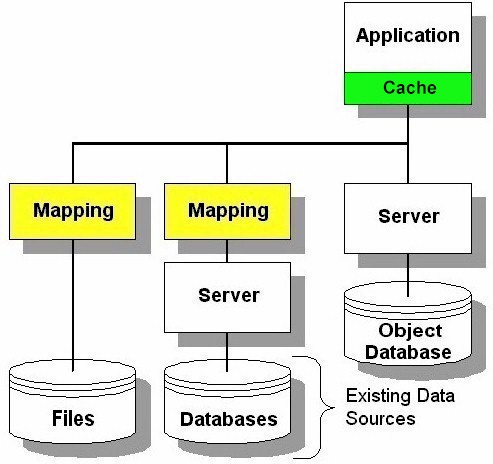
Monoliths versus object-centric models
The shift from monolithic structures to object-centric architectures is less about adopting new technology and more about changing how data is handled. In a monolith, data and logic are tightly coupled. This creates a rigid system where scaling one part of the application often requires scaling the entire system. Object-centric models decouple these elements, allowing data to be treated as independent entities that can be processed in parallel.
This structural difference directly impacts how systems handle growth and change. Monoliths tend to become slower and more complex as they grow, while object-centric designs maintain agility by isolating changes. The following table compares these two approaches across four critical dimensions.
| Dimension | Monolithic Architecture | Object-Centric Architecture |
|---|---|---|
| Scalability | Vertical scaling required; often leads to over-provisioning. | Horizontal scaling of individual objects; efficient resource use. |
| AI Readiness | Data silos make integration difficult; requires heavy ETL. | Native support for AI agents; data is accessible and structured. |
| Data Integrity | Centralized control ensures consistency but creates bottlenecks. | Distributed integrity; objects maintain their own state rules. |
| Development Velocity | Slow; changes risk breaking unrelated parts of the system. | Fast; isolated objects allow independent updates and testing. |
The rigidity of monoliths often forces teams to choose between stability and speed. When a new feature is needed, the entire codebase may need to be retested. In contrast, object-centric models allow teams to update specific objects without disrupting the rest of the application. This flexibility is essential for modern enterprises that need to adapt quickly to market changes.
How AI models consume object data
Traditional AI systems often process raw pixel data as a single, flat vector. This approach forces the model to learn relationships between every possible combination of pixels, a task that grows exponentially complex as scenes become more detailed. Object-centric architecture changes this by structuring data around discrete entities. Instead of seeing a jumble of colors, the model identifies distinct objects—like a person, a car, and a tree—and treats them as individual units.
This structural shift directly enables efficient causal representation learning. By isolating each object, the system can analyze properties and behaviors independently. Research presented at ICLR demonstrates that this method reduces the multi-object problem to a set of single-object disentanglement tasks. The model no longer needs to untangle a chaotic web of interactions; it simply matches and tracks individual items within a set.
The practical advantage is a significant reduction in computational load and improved accuracy. When objects are treated as separate entities, the AI can apply weak supervision from sparse perturbations to learn specific attributes without confusion from background noise. This mirrors how humans perceive the world: we recognize a coffee cup and a laptop as separate items with distinct functions, rather than a single complex texture. For enterprise applications, this means AI systems can reason about complex environments with far less data and processing power.
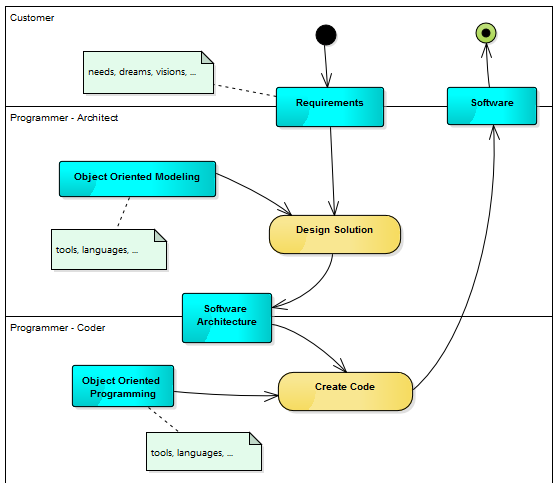
Real-world object-centric implementations
Object-centric architecture moves beyond abstract theory into active production environments. Several platforms now use programmable objects as the primary unit of data storage and logic, allowing for more granular control over state changes.
Current implementation areas
-
Blockchain Asset Management
Platforms like Sui treat objects as the fundamental unit of data. Developers define, create, and manage these programmable objects to represent user-level assets, enabling unique ownership and state management that monolithic ledgers struggle to replicate efficiently. -
Enterprise Data Platforms
Large-scale data systems are adopting object-centric models to decouple data storage from processing logic. This allows teams to update specific data objects without rewriting entire database schemas or restarting services, reducing downtime and operational complexity. -
IoT Device Management
Internet of Things networks use objects to represent individual sensors and actuators. Each object holds its own state and configuration, allowing for independent updates and fault isolation that prevents a single device failure from cascading through the entire system.
These examples show a clear pattern: when data and behavior are bundled into discrete objects, systems become easier to reason about and scale. Instead of managing a single massive state, engineers manage a collection of small, independent units that interact through defined interfaces.
When to adopt object-centric architecture
The shift to object-centric architecture is not a universal upgrade; it is a targeted response to specific scaling and complexity failures. Traditional monolithic systems handle well-defined, static data structures efficiently. They struggle when the data landscape becomes dynamic, sparse, or requires independent reasoning about distinct entities.
Adopt this approach when your AI initiatives are bottlenecked by rigid data schemas. Object-centric models disentangle properties, allowing systems to reason about individual entities rather than processing a monolithic blob. This is particularly effective in scenarios involving weak supervision or sparse perturbations, where traditional Euclidean encodings fail to capture the underlying causal structure of the data.
Consider the transition if your current infrastructure cannot isolate variables for independent updates. In these cases, the object-centric model reduces the multi-object problem to a set of single-object disentanglement tasks, significantly improving data efficiency and reducing the computational overhead required for complex reasoning.
No comments yet. Be the first to share your thoughts!