
What defines object-centric architecture 2026
Object-centric architecture represents a fundamental shift in how software systems manage state and interaction. Instead of relying on remote procedure calls or service-oriented boundaries, this model treats data objects as the primary unit of existence. In 2026, this approach is no longer just an alternative; it is the standard for building systems that must handle the scale and complexity of modern AI workloads.
At its core, object-centric design moves away from the rigid, centralized databases of the past. Instead, data is encapsulated within discrete, self-contained objects that carry their own state and logic. This structure allows for finer-grained concurrency and more predictable system behavior. When an AI agent needs to process information, it interacts directly with these objects, reducing the overhead of serialization and network hops that traditionally bottlenecked performance.
The relevance of this architecture in 2026 stems from the demands of AI-ready systems. Large language models and autonomous agents require low-latency access to structured context. By treating data as first-class citizens that can be composed, verified, and transferred independently, developers can build systems that are both more resilient and easier to reason about. This shift mirrors the evolution seen in modern blockchain object models, where every piece of data is a unique, verifiable entity1.
This architectural style prioritizes composability. Objects can be combined, split, or transformed without requiring a central coordinator to manage the entire state transition. This decentralization of control is critical for systems that must operate across distributed environments, ensuring that AI-driven processes can execute reliably even when network conditions are unpredictable.
Objects as first-class state units
Traditional architectures often treat system state as a monolithic blob or bind it tightly to specific service boundaries. Object-centric architecture shifts this paradigm by treating data objects as independent, addressable entities. Each object carries its own state, identity, and access controls, allowing the system to manage complexity at a granular level rather than through rigid, global transactions.
This model enables more flexible system design. When data is encapsulated in discrete objects, operations can target specific pieces of information without requiring locks on entire datasets or services. This granularity reduces contention and allows for parallel processing of unrelated state changes, significantly improving throughput and responsiveness in complex environments.
The implications for legacy systems are substantial. By decoupling state from the service layer, applications can evolve more rapidly. New features can be built around existing objects without refactoring the underlying database schema or service contracts. This approach mirrors the efficiency seen in modern object-oriented databases, where resources and assets are treated as first-class citizens that transactions interact with directly.
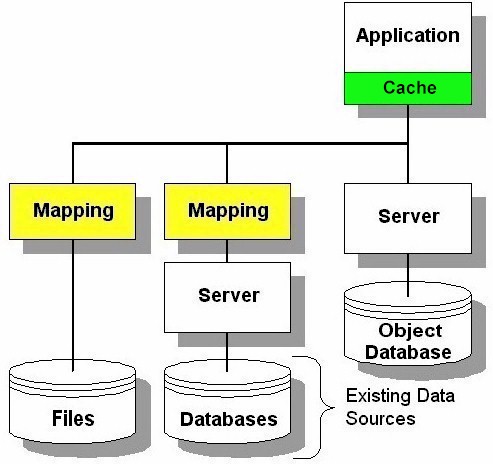
Treating objects as first-class units transforms how systems represent and expose data. Instead of querying large, coupled tables, the system interacts with precise, addressable entities. This structural advantage simplifies dependency management and makes the system more resilient to change, laying a foundation for truly AI-ready, scalable infrastructure.
How object ownership enables parallel execution
Traditional database architectures often bottleneck on global locks. When multiple transactions attempt to modify the same data record, the system must serialize these operations, forcing them to wait in line. This sequential processing creates a hard ceiling on throughput, regardless of how many processor cores are available.
Object-centric architecture removes this constraint by treating data as independent objects with strict ownership rules. Languages like Move, used in the Sui network, enforce that only one entity holds the exclusive right to modify an object at any given time. This clarity allows the system to analyze transaction dependencies before execution.
If two transactions touch different objects, the system executes them simultaneously. There is no need to wait for a global lock to clear. This parallelism scales linearly with network capacity, turning what was once a sequential bottleneck into a concurrent advantage.
This dependency-based scheduling is the core structural advantage. Instead of a single thread managing all access, the system identifies independent object sets and processes them in parallel. This is particularly vital for AI-ready systems that must handle high-frequency, concurrent agent interactions without latency spikes.
AI Agents as Economic Actors
The shift toward object-centric architecture is driven by the emergence of AI agents as independent economic participants. These agents require a digital infrastructure capable of handling high-frequency, machine-to-machine transactions with minimal friction. Object-centric models provide this foundation by treating data and code as discrete, programmable assets rather than monolithic state databases.
In traditional systems, updating a single piece of data often requires locking or rewriting large portions of the ledger. This creates bottlenecks that are incompatible with the autonomous, real-time nature of AI agents. Object-centric architectures, such as those built on the Move programming language, allow agents to interact with specific assets directly. This enables parallel processing and reduces latency, which is critical for agents executing complex strategies or negotiating value across networks.
This structural advantage is particularly evident in environments where security and precision are paramount. While legacy systems remain vulnerable to broad exploits, object-centric models isolate assets, limiting the blast radius of any potential failure. For AI agents operating in 2026’s value networks, this means they can transact with confidence, knowing that their programmable assets are protected by fine-grained access controls and immutable object states.
Security improvements over account models
Object-centric architectures like Sui address fundamental structural vulnerabilities inherent in account-based models such as Ethereum's EVM. In traditional account systems, state is global and sequential. Every transaction must wait for the previous one to complete, creating a bottleneck that attackers can exploit through front-running or congestion-based denial of service. More critically, this linear dependency means a single compromised contract can drag down the entire chain's security posture.
By making objects the native unit of onchain data, object-centric designs isolate state changes. Each object carries its own access control rules, meaning a vulnerability in one asset does not compromise others. This granular isolation prevents the "domino effect" seen in many EVM hacks, where a single flawed smart contract leads to total treasury drains. The architecture shifts security from a monolithic boundary to a distributed, object-level enforcement.
This structural shift also mitigates common vector attacks. Front-running becomes significantly harder because transactions only need to agree on the specific objects they modify, not a global state root. If two transactions touch unrelated objects, they execute in parallel without conflict. This reduces the attack surface for MEV (Maximal Extractable Value) bots that typically profit from sequential ordering delays.
The result is a system where security is compositional rather than cumulative. As noted by community analysts, this move model is a necessary architectural fix against the recurring $100M+ EVM hacks that plague legacy chains. By decoupling state management from global ordering, object-centric systems provide a more resilient foundation for high-value applications.
Frequently Asked Questions About Object-Centric Models
How does object-centric architecture improve performance over account-based models?
Object-centric architectures treat individual data units as the primary state atoms rather than grouping them into broad accounts. This distinction allows the network to verify transaction dependencies at the object level, enabling true parallel execution for non-conflicting operations. By isolating state changes to specific objects, the system avoids the sequential bottlenecks inherent in traditional account-based ledgers, resulting in significantly higher throughput and lower latency for concurrent transactions.
Is object-centric architecture secure against smart contract vulnerabilities?
Yes, this model offers structural security advantages by enforcing strict ownership and capability-based access controls. Because every asset and piece of data is a distinct object, the Move programming language can verify that only the authorized owner or holder of a specific capability can modify or transfer an object. This granular control reduces the attack surface for common exploits like reentrancy, ensuring that state transitions are atomic and verifiable at the object level before they are committed to the ledger.
Can legacy systems integrate with object-centric networks?
Integration typically requires a translation layer or bridge that maps existing account-based states to object-centric representations. Since the underlying data structures differ fundamentally, direct interaction is not natively supported without conversion. However, many modern frameworks are developing standardized interfaces that allow legacy applications to interact with object-centric assets by wrapping traditional accounts into object-compatible formats, facilitating a smoother transition for established developers and users.
Footnotes
-
Sui Documentation. "Object Model." https://docs.sui.io/develop/sui-architecture/object-model ↩
No comments yet. Be the first to share your thoughts!