
What object-centric architecture actually is
Object-centric architecture is a structural shift from flat, monolithic databases to systems built around discrete, trackable entities. Instead of storing data in rigid rows and columns that must be joined and reshaped for every query, this approach treats every item—like a user, a sensor reading, or a shipment—as an independent object with its own identity, properties, and lifecycle.
The primary driver for adopting this model in 2026 is real-time intelligence. By decoupling objects, systems can process updates to one item without locking or rewriting the entire dataset. This enables causal reasoning: because each object’s state is isolated, you can trace exactly how a change in one area caused a ripple effect elsewhere, rather than sifting through tangled relational dependencies.
Consider a supply chain network. In a traditional flat-table model, tracking the real-time location and temperature of a single container requires joining multiple large tables, which slows down response times. In an object-centric system, the container is a single object. Its location, temperature, and status are updated simultaneously and independently, allowing logistics platforms to react to delays or spoilage risks instantly.
This separation of concerns also simplifies maintenance. When a new property needs to be added to a specific type of object, it doesn’t require restructuring the entire database schema. The system remains agile, adapting to dynamic state updates without the friction of legacy relational constraints.
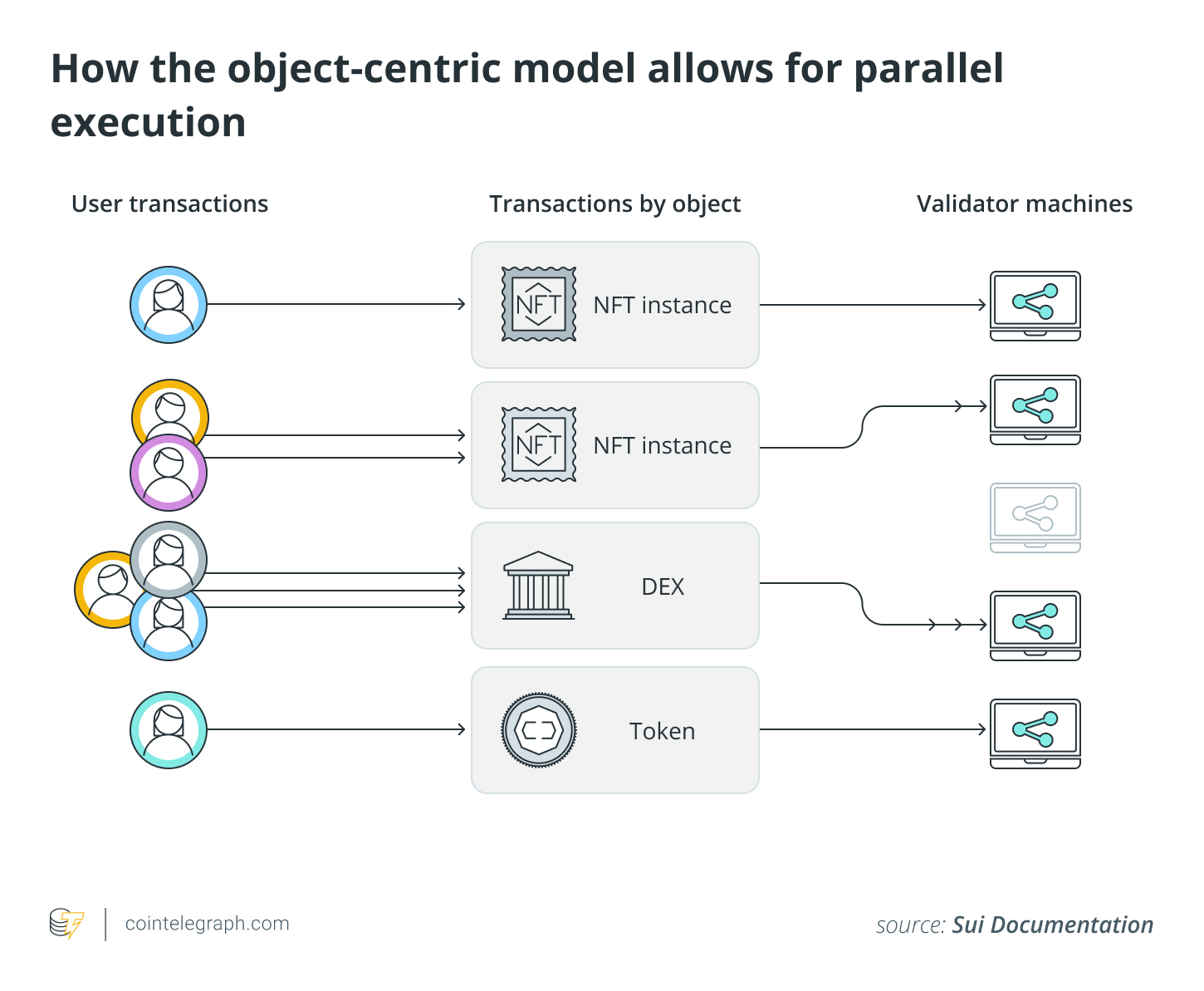
How object-centric design powers real-time decision intelligence
Traditional systems often treat data as a single, monolithic block. When one part of that block changes, the entire system must lock up to ensure consistency. This creates a bottleneck. Object-centric architecture changes the rules by treating every entity as an independent unit.
Think of a busy intersection. In a monolithic system, every car waits for a central traffic controller to approve movement for the entire grid, causing gridlock. In an object-centric system, each car (or object) has its own state and rules. They move in parallel, only interacting when they physically cross paths. This "disentanglement" allows systems to process changes simultaneously without locking entire datasets.
This parallel processing is the primary driver for 2026 adoption. It is not just about storage efficiency; it is about speed. By separating object properties, systems can update one item—like a supply chain inventory count or an IoT sensor reading—without pausing the rest of the network.
Consider a global supply chain. When a shipping container’s location updates via IoT sensors, an object-centric system processes that specific update instantly. It does not wait to re-index the entire global logistics database. This ability to handle dynamic state updates in real-time enables faster, more accurate decision-making at scale.
Relational vs. Object-Centric Architectures
Traditional relational databases treat data as static rows in tables, requiring complex joins to understand relationships. Object-centric architectures, by contrast, treat entities as independent objects with their own properties. This separation, or "disentanglement," allows the system to reason about one object without being slowed down by the state of others.
The primary driver for adopting object-centric models in 2026 is real-time performance. While relational models excel at structured storage, they struggle with the dynamic, sparse state updates typical of modern IoT or supply chain networks. Object-centric designs handle these changes natively, enabling instant causal reasoning and faster response times.
| Dimension | Relational (SQL) | Object-Centric |
|---|---|---|
| Scalability | Limited by join complexity | High; scales with object count |
| Real-time Latency | Higher due to rigid schema | Low; native dynamic updates |
| Complexity | High for sparse data | Low for independent objects |
| Use Case Fit | Financial records, ERPs | IoT, Supply Chain, Gaming |
This comparison highlights why object-centric models are becoming the standard for applications requiring immediate, independent state management.
Key applications driving 2026 adoption
The shift to object-centric architecture is no longer just a theoretical exercise in data organization. It is becoming the standard for systems that must handle high-frequency, real-time updates without collapsing under their own complexity. By treating entities—whether they are digital tokens or physical assets—as independent units of state, these systems achieve a level of disentanglement that traditional monolithic models cannot match.
This separation allows for precise causal reasoning. When an object’s state changes, the update is isolated to that specific entity. This means the system can process multiple state changes in parallel, significantly reducing latency. In 2026, this capability is the primary driver for adoption, enabling applications to react to user inputs and environmental shifts instantly rather than in batches.
Supply chain visibility
In global logistics, an object-centric model treats each package, pallet, or container as a distinct entity with its own history and current state. When a shipment encounters a delay or a temperature fluctuation, the system updates only that specific object’s data. This allows for real-time rerouting and dynamic inventory adjustments without requiring a full system-wide recalculation. The result is a supply chain that adapts to disruptions as they happen, rather than reacting to them after the fact.
IoT sensor networks
The Internet of Things generates a massive volume of fragmented data. Object-centric architecture simplifies this by assigning a unique, persistent identity to each sensor or device. Instead of aggregating all sensor data into a single, unwieldy stream, the system tracks each device’s state independently. This approach is critical for real-time monitoring in smart cities or industrial settings, where the failure or status change of one sensor must be processed immediately without blocking the data flow from thousands of others.
Dynamic AI agents
For AI agents operating in complex environments, object-centric models provide a stable "world model." Each object in the environment—whether a virtual asset or a physical robot component—is tracked separately. When the agent takes an action, only the affected objects update their states. This disentanglement allows the AI to predict the consequences of its actions with greater accuracy and speed, enabling more sophisticated decision-making in real-time scenarios like autonomous navigation or complex game environments.
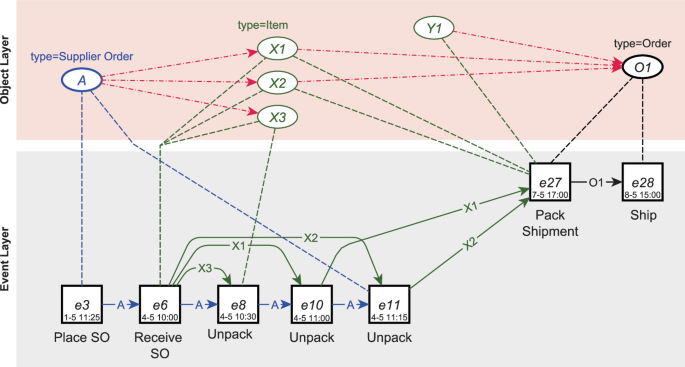
Migrating to object-centric architecture
The shift to real-time intelligence requires moving away from static data lakes toward dynamic, object-centric models. This migration isn't just about storage; it's about enabling causal reasoning by separating object properties from their environment. In sectors like IoT or supply chain management, this disentanglement allows systems to understand that a truck's location changes independently of its cargo, enabling precise, real-time decision-making.

Start by identifying discrete entities in your current data. Map out which attributes are intrinsic to the object (e.g., a vehicle's VIN) versus contextual (e.g., its current GPS coordinates). This audit reveals where your legacy systems conflate state with identity, creating the noise that blocks real-time clarity.
Establish clear boundaries for each object. Use weak supervision to label these boundaries without manual annotation. This step ensures that your architecture treats each entity as a distinct unit of truth, allowing you to track changes in one object without triggering false alarms in unrelated data streams.
Replace batch processing with real-time state updates. Instead of storing sparse perturbations as isolated events, encode them as dynamic changes to an object's properties. This approach mirrors how humans perceive motion, allowing your system to reason causally about what happened next based on the current state of the object.
Validate your new architecture under load. Object-centric models excel when handling many independent streams simultaneously. Test how well your system maintains low latency when tracking hundreds of objects in real-time, ensuring that the decoupled nature of your data doesn't introduce bottlenecks during peak operational hours.
No comments yet. Be the first to share your thoughts!