

Define your scene decomposition goal
Object-centric learning shifts how models see the world. Instead of treating an image as a flat grid of pixels, this approach decomposes visual scenes into modular, object-level representations. The goal is to isolate independent entities—like a car, a pedestrian, or a traffic light—so each can be reasoned about separately.
This shift from holistic pixel analysis to discrete object slots is foundational for causal reasoning. When objects are distinct, a model can track how one entity influences another over time, rather than just correlating pixel changes. This modularity simplifies multi-object reasoning, allowing the system to understand interactions and predict outcomes based on individual component behaviors.
To achieve this, you must first define what constitutes an "object" in your specific context. Are you tracking moving vehicles in a video stream? Identifying parts in an assembly line? The definition of your scene decomposition goal determines the architecture of your slots and the loss functions you will use to separate them. Without a clear target, the model may fail to distinguish between background noise and meaningful entities.
Select a disentanglement backbone
Choosing the right neural network architecture for object-centric learning requires balancing modular representation with computational efficiency. The goal is to decompose visual scenes into distinct, reusable entities that support causal reasoning. You need a backbone that can isolate objects from backgrounds and handle interactions without collapsing into a single holistic feature map.
Start by defining the scene complexity and the number of potential objects. If you are working with static images or simple videos, Slot Attention offers a strong baseline. For dynamic environments requiring action-based disentanglement, consider models like DIAYN or variants that incorporate temporal consistency. The architecture must support weak supervision signals, allowing it to learn object boundaries without pixel-level masks.
Evaluate your options against three criteria: computational cost, scalability, and compatibility with downstream causal modules. Slot Attention is efficient for moderate object counts but may struggle with occlusion. Variants like ObjectFormer or GRL improve robustness but increase training time. Ensure your choice aligns with the inference speed requirements of your causal reasoning pipeline.
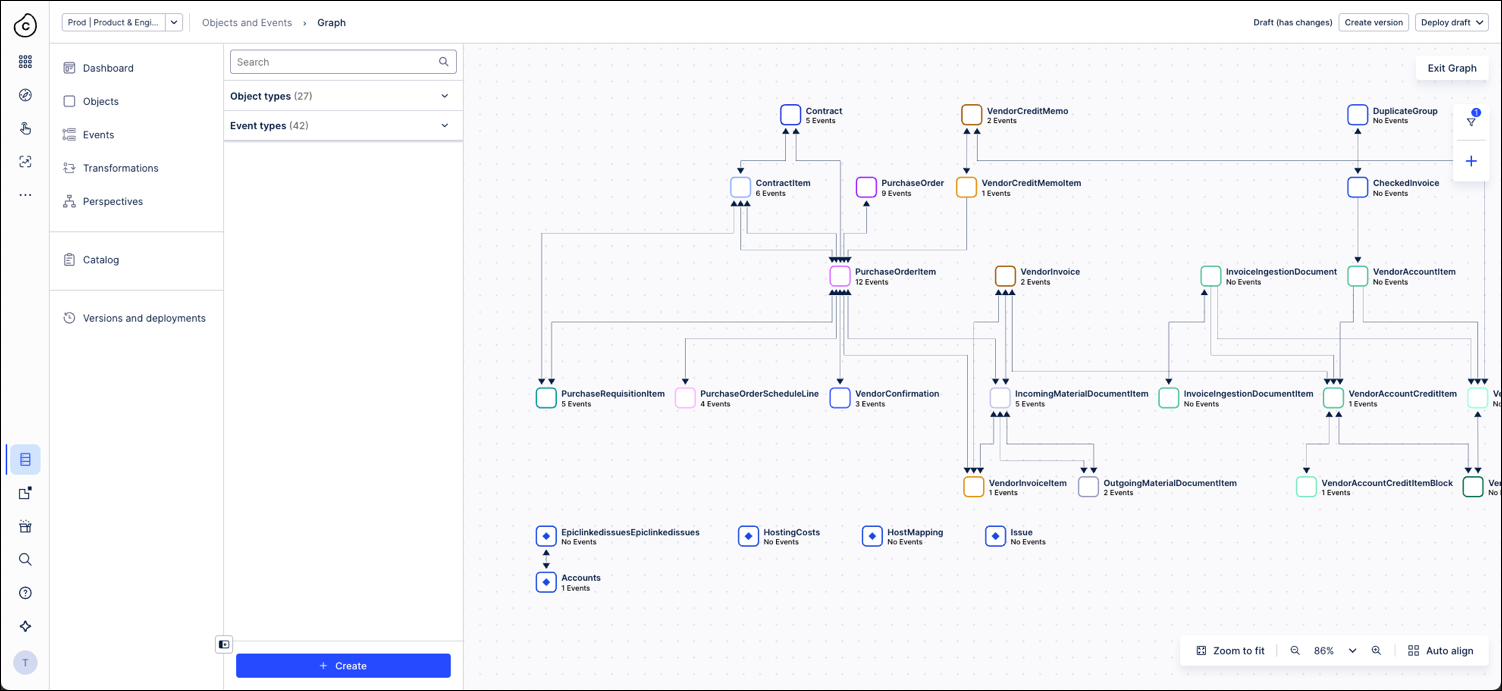
Begin by analyzing your dataset. Determine if scenes are static or dynamic, and estimate the maximum number of interacting objects. This dictates whether you need a fixed-slot approach like Slot Attention or a more flexible, set-based model. Simple scenes often suffice with basic slot mechanisms, while complex, cluttered environments require more sophisticated attention heads or iterative refinement steps.
Slot Attention is a widely adopted backbone for object-centric learning. It uses an attention mechanism to assign pixels to slots, effectively grouping them into object representations. It is computationally efficient and easy to implement. However, it assumes a fixed number of objects and can struggle with significant occlusion. Consider variants like ObjectFormer or GRL if your scenes involve heavy overlap or require more robust feature isolation.
For video or interactive tasks, static disentanglement is insufficient. Models like DIAYN or temporal Slot Attention incorporate action and time steps to maintain object identity across frames. These approaches help the network understand object persistence and interaction, which is critical for causal reasoning. They add complexity but provide the dynamic context needed for tasks like prediction or planning.
Object-centric models often benefit from weak supervision, such as image-level labels or simple reconstruction losses, rather than expensive pixel masks. Ensure your chosen backbone can integrate these signals effectively. Test how well the model isolates objects when only given coarse supervision. A backbone that struggles with weak signals will fail to provide the clean, modular representations required for downstream causal analysis.
Apply sparse perturbation supervision
Training an object-centric architecture to reason causally requires teaching the model to distinguish individual objects without expensive, manual labeling. The core strategy leverages weak supervision from sparse perturbations. Instead of asking the network to identify every pixel or object class, we introduce controlled changes—perturbations—to specific parts of the input and observe how the representation shifts. This approach significantly reduces data requirements while effectively isolating causal factors. By reducing the multi-object problem to a set of single-object disentanglement tasks, the model learns to associate specific features with specific entities.
Begin by defining a perturbation function that targets only one object instance at a time within a scene. Unlike dense labeling, this method applies minimal changes—such as shifting position, altering color, or changing scale—to a single entity while leaving others static. The model must learn to attribute these specific changes to the corresponding object slot in its representation. This isolation prevents the model from conflating features across different objects, a common failure mode in joint encoding approaches.
Use the perturbed inputs to create weak supervision signals. When an object is perturbed, the loss function penalizes the model if its representation for that object fails to reflect the change, while rewarding stability in representations of unperturbed objects. This does not require ground-truth masks for every object. Instead, it relies on the consistency between the input perturbation and the output representation. The model learns to disentangle properties by minimizing the error between the expected causal effect and the actual representation shift.
The architecture must be structured to handle each object independently. By treating the multi-object scene as a collection of single-object problems, the model avoids the combinatorial explosion of interactions. This means the loss function is applied per object slot. If the perturbation affects object A, only the representation for A should change significantly. Representations for B, C, and others should remain invariant. This enforces a clean separation of causal factors, allowing the model to reason about each object’s properties in isolation.
Once trained, test the model’s causal understanding by asking counterfactual questions. Modify a specific object in the latent space and observe if the generated output reflects only that change. For example, if you change the color of a ball in the representation, the output should show a differently colored ball, but the shape, position, and other objects should remain unchanged. This validation step confirms that the model has truly disentangled the causal factors rather than merely memorizing correlations.
This method proves more data-efficient than comparable approaches that encode all objects jointly. By focusing on sparse, targeted perturbations, the model learns the underlying causal structure of the scene without needing exhaustive annotations. The result is an architecture that can generalize better to new scenes and reason about individual objects with greater precision.
Validate causal representation quality
You have built the model. Now you must prove it actually understands objects rather than just memorizing pixels. The goal is to verify that the multi-object problem has been successfully reduced to single-object disentanglement. If the model cannot isolate an object’s properties when that object moves, the causal representation is broken.
Start by testing slot independence. Extract the latent slots and check for statistical independence between them. If slot A changes when only slot B moves, the model is leaking information. Use mutual information metrics to quantify this leakage. High mutual information means the slots are entangled, and the causal structure is flawed.
Next, test robustness to background changes. Perturb the background while keeping objects static. A valid causal representation should ignore background noise. If the object slots shift in response to background changes, the model is not disentangling the causal factors of variation.
Finally, check perturbation response efficiency. Introduce sparse perturbations to specific objects and observe if the model can efficiently update only the relevant slot. This validates the weak supervision signal. If the update propagates to unrelated slots, the causal graph is not sparse or correct.
| Test Type | Method | Success Metric |
|---|---|---|
| Slot Independence | Calculate mutual information between slots | Low mutual information (near zero) |
| Background Robustness | Perturb background, measure slot variance | Low slot variance in object slots |
| Perturbation Efficiency | Sparse object perturbation, track slot updates | Only affected slot changes significantly |
-
Verify statistical independence between all extracted slots
-
Measure mutual information to detect information leakage
-
Test robustness by perturbing background elements
-
Confirm sparse perturbation updates only relevant slots
No comments yet. Be the first to share your thoughts!