
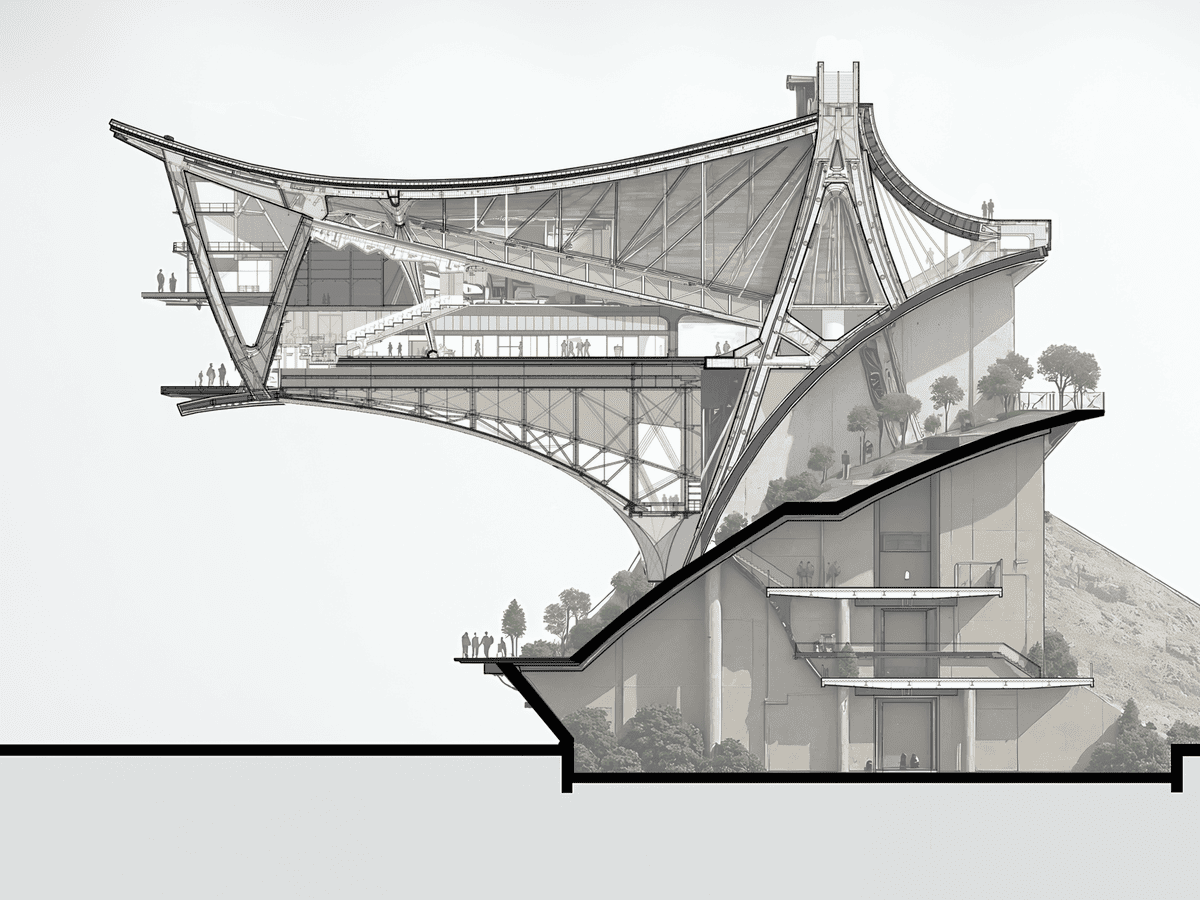
What is object-centric architecture?
Object-centric architecture treats data as distinct, independent entities rather than a single unified block. Instead of forcing information into rigid rows and columns, this approach groups related attributes together. Each object carries its own identity and relationships, making it easier for AI models to understand context and causality.
This method mirrors how humans perceive the world. We see a car, a person, and a tree as separate items with specific traits, not as a blur of pixel data. By structuring data this way, systems can isolate variables more effectively. Research indicates that this structure requires significantly fewer perturbations to train models, making the learning process more data-efficient.
The primary benefit is disentanglement. In a monolithic system, changing one attribute often requires rewriting large portions of the dataset. In an object-centric model, you can modify a single object’s properties without disturbing the entire structure. This modularity simplifies maintenance and allows for more precise updates, which is critical for dynamic AI applications.
While monolithic databases excel at simple transactional integrity, they struggle with complex, interconnected data. Object-centric architecture offers a flexible alternative. It allows for richer relationships and easier integration of unstructured data, positioning it as a strong candidate for next-generation AI systems.
Object-centric architecture choices that change the plan
Moving from monolithic data structures to object-centric architectures requires balancing model efficiency against implementation complexity. While monolithic systems process entire datasets as flat tensors, object-centric models disentangle individual entities, allowing AI agents to reason about specific components independently. This shift improves data efficiency but demands careful evaluation of computational overhead and integration costs.
The primary advantage lies in causal representation. By isolating properties like position, velocity, and texture for each object, these systems learn more transferable representations. This makes them particularly effective for simulations and environments where understanding individual interactions is critical. However, achieving this robust disentanglement often requires more sophisticated loss functions and weak supervision signals to ensure stable convergence.
The computational cost of maintaining separate latent spaces for each detected object can exceed monolithic baselines, especially in high-resolution video streams. Additionally, debugging becomes harder when errors stem from incorrect object assignment rather than simple feature extraction failures.

The following comparison outlines how these architectures perform across key evaluation metrics. Use this table to determine if the benefits of disentanglement outweigh the engineering effort for your specific use case.
| Metric | Monolithic | Object-Centric | Tradeoff |
|---|---|---|---|
| Data Efficiency | Low | High | Higher initial training cost |
| Interpretability | Poor | Strong | Complex debugging |
| Computational Load | Predictable | Variable | Peak memory spikes |
| Transfer Learning | Weak | Strong | Domain alignment needed |
| Implementation Complexity | Low | High | Requires specialized pipelines |
For teams prioritizing rapid deployment and simple data pipelines, monolithic structures remain viable. However, for applications requiring causal reasoning, simulation, or long-term planning, object-centric architectures offer superior long-term value despite the initial engineering hurdle.
Choosing the Right Architecture for AI-Ready Systems
Monoliths handle data as a single, rigid block. Object-centric architecture treats information as independent entities with relationships. This distinction determines how well your system adapts to new AI models. The choice is not about technology trends; it is about data flexibility.
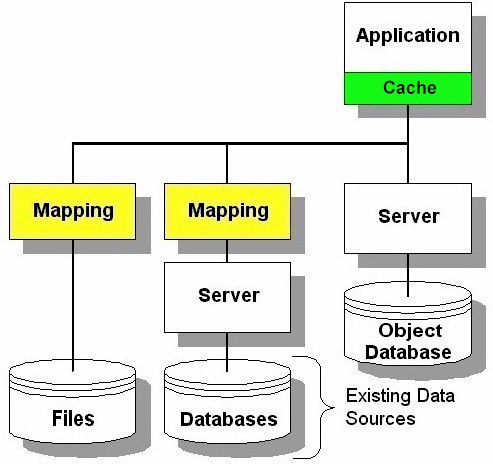
Monoliths struggle when data structures shift. If your AI models require frequent schema changes, a rigid database will slow development. Object-centric designs allow new attributes to attach to existing objects without breaking the whole system. Test your current data pipeline for rigidity.
AI systems thrive on context. Object-centric architectures naturally map complex relationships between entities. If your data involves many-to-many connections or hierarchical dependencies, monoliths require expensive joins. Object-centric models preserve these links inherently, reducing processing overhead for AI inference.

Modern AI tools expect standardized, modular data inputs. Monoliths often require custom extraction layers to feed these tools. Object-centric systems expose data through clear interfaces. This reduces the engineering effort needed to connect new AI capabilities to your existing data stores.
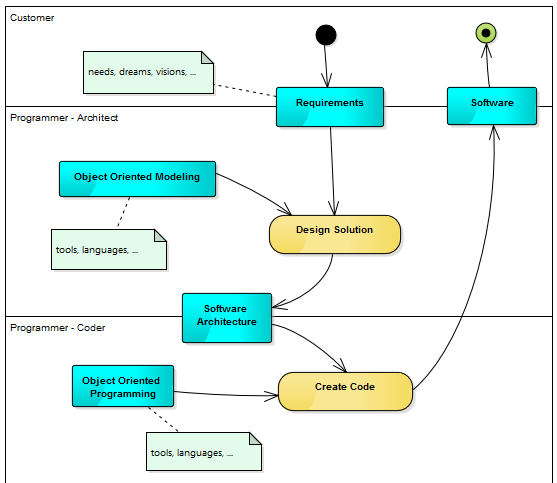
As AI workloads grow, data volume expands non-linearly. Monoliths scale vertically, hitting hardware limits quickly. Object-centric architectures support horizontal scaling by distributing objects across nodes. This ensures your system remains responsive as AI model demands increase.
The Weak Options in Object-Centric Design
Not every monolith deserves to be dismantled. The promise of object-centric architectures often obscures the reality of implementation complexity. Before committing to a new data topology, you must separate genuine architectural gains from misleading marketing claims.
The most common mistake is assuming that disentanglement solves all data quality issues. Research by Mansouri et al. shows that object-centric models require significantly fewer perturbations to achieve causal efficiency, but this efficiency comes with a steep learning curve for weak supervision [1, 2]. If your team lacks the expertise to manage sparse perturbations, the model will likely fail to disentangle properties correctly, resulting in worse performance than a well-tuned monolith.
Another weak option is applying object-centric logic to static, low-dimensional datasets. These architectures shine in complex, high-dimensional environments where causal relationships are obscured by noise. For simple tabular data, the overhead of defining object boundaries and interactions adds unnecessary latency and computational cost without improving predictive accuracy.
The decision is not about replacing monoliths entirely, but about matching the architecture to the data's complexity. Use object-centric designs when you need explainable, causal reasoning in complex systems. Stick with monolithic structures for straightforward, high-volume data processing where speed and simplicity outweigh the need for granular disentanglement.
Object-centric architecture: what to check next
Before committing to an object-centric architecture for AI-ready data systems, it helps to separate the technical reality from the hype. These systems decompose complex scenes into modular, object-level representations, which fundamentally changes how your models process information. The following answers address the most common practical objections regarding performance, complexity, and integration.
No comments yet. Be the first to share your thoughts!