
What object-centric architecture 2026 actually solves
Object-centric architecture 2026 shifts the unit of computation from shared global state to unique, composable objects. In traditional microservices, data is often fragmented across databases, creating consistency challenges that require complex distributed transactions. By treating data as discrete objects with defined ownership and behavior, developers can achieve true parallelism without the overhead of locking mechanisms.

This design is particularly relevant as systems scale. When every transaction touches a unique object, multiple operations can occur simultaneously on different objects without conflict. This contrasts sharply with legacy models where shared tables become bottlenecks, forcing systems to serialize access and limiting throughput.
The shift isn't just theoretical. Platforms like Sui have demonstrated that object-centric models can handle high-frequency transactions while maintaining strong consistency. As we move into 2026, the ability to process thousands of parallel operations efficiently is becoming a standard requirement rather than a luxury.
For teams evaluating this shift, the primary benefit is simplicity in concurrency management. By eliminating shared state contention, developers can focus on business logic rather than distributed systems complexity. This makes object-centric architecture a compelling choice for applications requiring high scalability and low latency.
Object-centric architecture 2026 choices that change the plan
Choosing an object-centric model over traditional microservices or account-based ledgers requires balancing parallel execution speed against implementation complexity. The primary advantage lies in how data is structured and accessed, but this shift introduces specific operational costs and learning curves that teams must evaluate before committing to the architecture.
| Factor | Object-Centric (e.g., Sui) | Traditional Microservices | Account-Based Ledgers |
|---|---|---|---|
| Parallelism | High; objects act as independent execution units | Medium; requires careful service boundary design | Low; sequential state updates often required |
| Data Modeling | Programmable objects with embedded logic | Stateless services with external state | Simple key-value account balances |
| Complexity | High; requires new mental models for developers | Medium; mature tooling and patterns | Low; simple and familiar |
| Scalability | Horizontal; scales with object count | Vertical/Horizontal; limited by service coupling | Vertical; limited by global state contention |
| Security Model | Object ownership and capability-based access | API gateways and IAM | Private key ownership |
The shift from microservices to data-centric design means moving from service-oriented boundaries to data-oriented boundaries. In an object-centric system, the object itself becomes the unit of work. This allows for true parallel processing because objects can be updated independently without locking entire databases or services. However, this requires developers to rethink how they model assets and state.
For teams building high-throughput applications like gaming or real-time marketplaces, the parallel execution capability is a significant advantage. Traditional microservices often struggle with the "thundering herd" problem where many requests hit the same service simultaneously. Object-centric architectures mitigate this by distributing load across many independent objects. The tradeoff is the increased cognitive load on developers who must manage object lifecycles and ownership rules.
Security is another critical factor. Object-centric models often use capability-based security, where access is granted through specific objects or references rather than broad permissions. This can reduce the attack surface for common vulnerabilities like unauthorized state changes. However, it also requires rigorous testing to ensure that object references are not leaked or misused. For example, recent discussions in the blockchain community highlight how object-centric designs can prevent large-scale hacks by isolating assets into distinct, verifiable objects.
When to choose object-centric architecture
Object-centric architecture shines in scenarios where data independence and parallel processing are paramount. Consider the following use cases:
Ideal use cases for object-centric design
-
Real-time Gaming
Game assets act as independent objects, allowing for instant updates and parallel state changes without server bottlenecks. -
High-Frequency Trading
Independent order books and asset objects enable microsecond-level processing and parallel execution of trades. -
NFT Marketplaces
Each token is a distinct object with its own metadata and ownership rules, simplifying transfers and royalties. -
Decentralized Social Networks
User profiles and posts are objects, enabling granular access control and parallel content delivery.
If your application involves complex, interconnected data that requires frequent global updates, a traditional relational database or microservices architecture might be more appropriate. Object-centric models excel when data can be naturally partitioned into independent units. The key is to identify whether your data has natural boundaries that align with object structures.
Choose the Next Step
Moving from microservices to object-centric architecture isn't just a refactor; it's a structural shift in how data flows. Microservices excel at isolating failure domains, but they often fragment the data that powers your business logic. Object-centric design, exemplified by platforms like Sui, treats data as first-class citizens that can be moved, owned, and updated directly.
The decision to adopt this pattern depends on your latency requirements and data consistency needs. If your application involves high-frequency updates to complex, interconnected entities, the overhead of service-to-service communication becomes a bottleneck. Object-centric models reduce this friction by allowing direct data manipulation within a shared state or object graph.
Evaluate Your Data Gravity
Start by mapping your most critical data entities. Identify which objects are updated most frequently and which require strict consistency. If your core domain logic revolves around moving assets or updating complex state rapidly, object-centric design offers a natural fit.
Assess Current Latency Pain Points
Measure the round-trip time for your most common read/write operations across service boundaries. If inter-service calls are creating noticeable latency, especially in user-facing interactions, this is a strong signal that data sharding is hurting performance. Object-centric architectures can resolve this by keeping related data co-located.
Compare Consistency Models
Microservices typically rely on eventual consistency via events. Object-centric systems often support immediate consistency for individual objects. Determine if your business logic can tolerate eventual consistency or if it requires instant updates for correctness. If the latter, the object model provides a clearer path to strong consistency without distributed transactions.
Decide on Migration Path
If the above checks align, consider a phased migration. Start by moving the most latency-sensitive, high-traffic objects to the new architecture. Keep the rest of the system in microservices for now. This hybrid approach lets you validate the performance gains without rewriting your entire codebase.
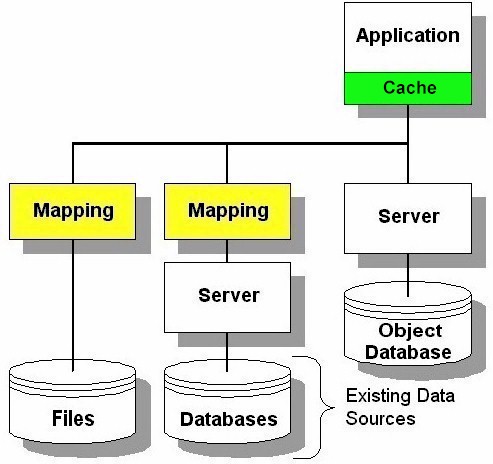

This approach minimizes risk while delivering tangible performance benefits. If the prototype shows significant latency reduction and simpler code, you can confidently expand the migration to other high-value objects.
The Weak Options in 2026
The shift from microservices to object-centric design is often sold as a silver bullet for scalability and security, but the reality is messier. While architectures like Sui’s object-centric Move model address critical vulnerabilities in traditional EVM chains, claiming it is the "only fix" ignores the trade-offs involved. Not every application needs the overhead of a fully object-centric runtime, and many teams are still stuck with legacy systems that cannot easily migrate.
When evaluating these options, look past the marketing hype. The primary keyword cluster here revolves around practical adoption, not theoretical perfection. You need to assess whether your data access patterns actually benefit from fine-grained parallelism or if your team is prepared for the complexity of managing object lifecycles. Many "modern" solutions are just microservices in disguise, lacking the true data-centric isolation that defines a robust object-centric architecture.
Avoid the trap of choosing a new stack solely because it promises higher throughput. If your use case doesn’t involve high-frequency, independent asset transfers, the added complexity of object-centric design may hurt more than help. Compare the actual engineering effort required to maintain consistency against the gains in transaction finality. The decision should be driven by your specific data constraints, not by the fear of missing out on the latest architectural trend.
Common Misconceptions
-
Microservices are obsolete
They remain viable for non-financial, loosely coupled services where strict data consistency is not the primary concern. -
Object-centric means no downtime
It improves availability for specific objects, but system-wide upgrades and state migrations still require careful planning. -
It fixes all security issues
It prevents certain re-entrancy and state-collision attacks, but smart contract logic bugs remain a significant risk.
Object-centric architecture 2026: what to check next
The shift toward object-centric design addresses specific bottlenecks that microservices often struggle with at scale. Below are the practical questions developers face when evaluating this architecture.
No comments yet. Be the first to share your thoughts!