
What is object-centric architecture?
Object-centric architecture shifts the focus of software design from abstract data flows to discrete, manageable entities. Instead of treating data as a monolithic blob or a stream of events, this approach models systems around specific objects that encapsulate both state and behavior. Think of it as organizing a library by book rather than by page number; you interact with complete, self-contained units rather than fragments of information.
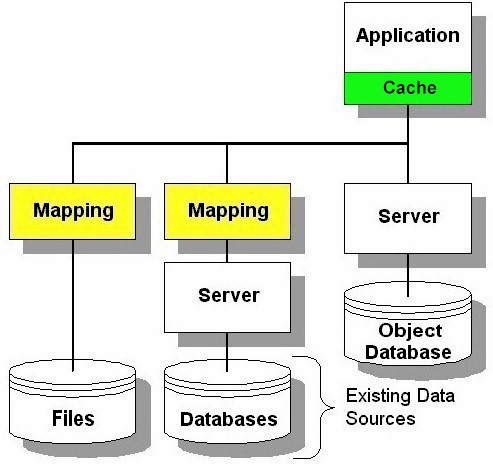
This paradigm is particularly effective for complex systems where clarity and maintainability are paramount. By isolating objects, developers can reduce coupling and make changes to one part of the system without risking unintended side effects elsewhere. Research into object-centric architectures highlights their ability to disentangle properties and enable efficient causal representation, making them a strong candidate for modern, scalable applications.
The core benefit lies in predictability. When every component has a clear identity and boundary, debugging becomes less about tracing invisible data currents and more about inspecting known variables. This structure aligns closely with how humans naturally categorize the world, reducing the cognitive load required to understand and modify the codebase.
Object-centric architecture choices that change the plan
Choosing an object-centric architecture over a legacy monolith is rarely a simple upgrade; it is a structural pivot that changes how your system handles state and complexity. While monoliths offer immediate simplicity in deployment, they often become brittle as domain logic grows. Object-centric designs, which divide responsibilities into self-sufficient entities, provide better encapsulation and reusability but introduce new operational overheads that engineering teams must evaluate carefully.
The primary tradeoff lies in the balance between encapsulation benefits and implementation complexity. On one side, you gain the ability to isolate failures and scale specific domain objects independently. On the other, you must manage distributed state consistency and inter-object communication patterns that do not exist in tightly coupled monolithic codebases.
Key factors to evaluate
When deciding whether to migrate or build new systems with object-centric principles, consider these concrete dimensions:
| Factor | Legacy Monolith | Object-Centric | Tradeoff Note |
|---|---|---|---|
| Development Speed | Fast initial setup | Slower design phase | Monoliths win on day-one velocity; object-centric wins on long-term maintainability. |
| State Management | Centralized, shared memory | Distributed, encapsulated | Object-centric reduces race conditions but requires careful API design. |
| Scalability | Vertical scaling only | Horizontal scaling per object | Object-centric allows granular resource allocation for high-demand entities. |
| Debugging | Easy to trace with logs | Harder to trace across boundaries | Object-centric requires robust distributed tracing and observability tools. |
| Team Autonomy | High coupling, coordinated changes | Low coupling, independent teams | Object-centric enables parallel development but demands strict interface contracts. |
When to choose which approach
The decision often depends on the maturity of your domain logic and team size. If your application is still in the early stages of validating core business hypotheses, a monolithic structure may be more efficient. The overhead of designing object boundaries and interfaces can slow down rapid iteration. However, as the number of features and team members grows, the coupling in a monolith becomes a bottleneck that object-centric architecture is designed to solve.
For complex domains with clear entity boundaries, such as e-commerce platforms or financial systems, object-centric architecture provides significant long-term value. The ability to encapsulate domain rules within specific objects ensures that changes to one part of the system do not inadvertently break unrelated features. This isolation is particularly valuable in large teams where multiple developers work on different parts of the codebase simultaneously.
Decision framework
To make a final decision, assess your current pain points. If you are experiencing frequent deployment conflicts, slow build times, or difficulty onboarding new developers, the tradeoffs of an object-centric architecture are likely worth the initial investment. If your system is small, stable, and your team is tight-knit, a monolith may continue to serve you well. The goal is not to adopt object-centric principles for their own sake, but to solve the specific scalability and maintainability challenges that your legacy architecture can no longer handle.
Core benefits of object-centric design
-
Encapsulation
Domain logic is bundled with data, reducing side effects and making code easier to test. -
Reusability
Self-sufficient objects can be reused across different parts of the application without duplication. -
Maintainability
Changes to one object do not require recompiling or redeploying the entire system. -
Scalability
High-demand objects can be scaled independently, optimizing resource usage and cost.
Choose the next step: Object-Centric Architecture in 2026
Legacy monoliths are failing because they force every feature to share a single, rigid database schema. As systems grow, this creates a tangled web of dependencies that slows down development and increases the risk of breaking unrelated features. Object-centric architectures solve this by treating data as independent, encapsulated objects rather than rows in a table.
This approach aligns software structure with real-world business entities. Instead of forcing objects into a relational model, the architecture stores and retrieves them as complete units. This reduces the need for complex joins and allows teams to update one part of the system without rewriting the entire codebase. It is the practical shift from "data-first" to "behavior-first" design.
To decide if this migration is right for your stack, follow this decision framework. It breaks down the transition into four actionable steps, helping you weigh the tradeoffs between immediate complexity and long-term maintainability.
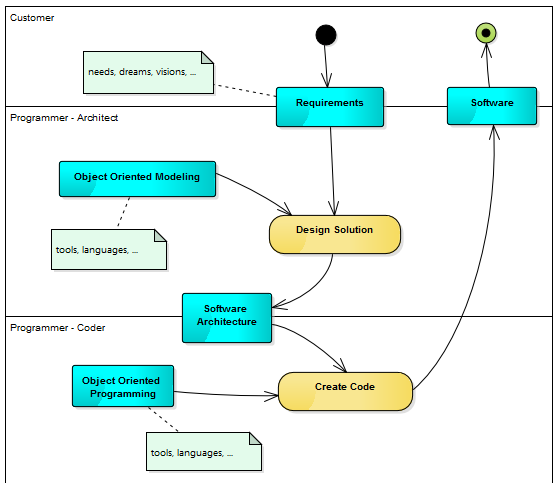
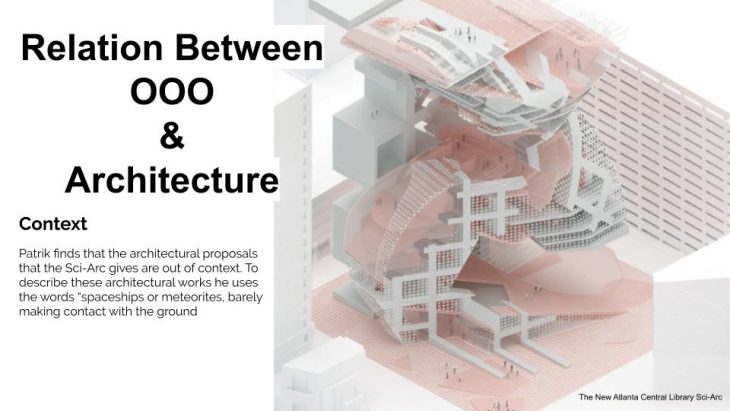
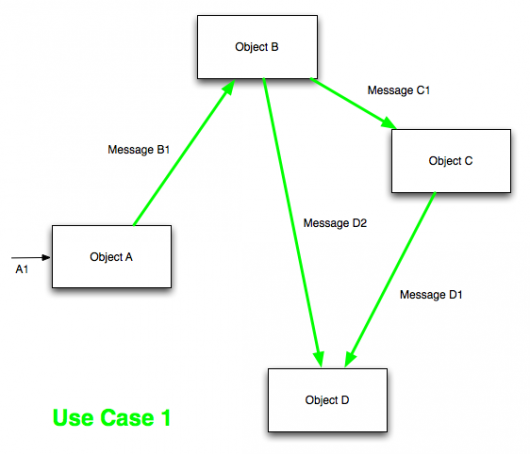
The shift to object-centric architecture is not just a technical upgrade; it is a strategic move to align your software with business reality. By treating data as independent, encapsulated objects, you create a system that is easier to understand, maintain, and scale. This approach reduces the cognitive load on developers and allows teams to move faster without breaking existing functionality.
While the initial migration requires careful planning, the long-term benefits in agility and maintainability are significant. As your system grows, the ability to update one part without affecting others becomes increasingly valuable. This is why object-centric architectures are becoming the standard for modern, scalable software systems.
Why the "Modern" Monoliths Are Failing
Object-centric architecture is no longer a theoretical niche; it is the baseline for scalable systems. Legacy monoliths that bundle state, logic, and presentation into a single deployable unit are hitting a hard ceiling. They cannot scale independently, and they obscure the causal relationships that matter for debugging and maintenance.
Many vendors pitch "modular monoliths" as a safe middle ground. This is often a misleading claim. Without strict object boundaries and independent lifecycle management, these systems simply become distributed monoliths with more friction. The complexity moves from code structure to operational overhead, offering none of the resilience benefits of true object-centric design.
The real tradeoff is between initial velocity and long-term stability. Monoliths win on day one. Object-centric architectures win on day 100. In 2026, the cost of technical debt from rigid coupling outweighs the convenience of early simplicity. The decision is not about technology; it is about whether you plan to survive the next decade of growth.
Object-centric architecture: what to check next
Is object-centric architecture just another buzzword?
No. It is a structural shift from monolithic, state-heavy codebases to modular systems where each unit handles its own data and logic. This approach reduces coupling and makes systems easier to maintain as they grow.
How does it differ from traditional microservices?
Microservices separate applications by business domain, often requiring complex network communication. Object-centric design focuses on encapsulating data and behavior within individual entities. This leads to tighter cohesion and simpler internal logic for each component.
Will this increase development complexity?
Initially, yes. You must define clear boundaries for each object. However, long-term maintenance costs drop significantly because changes in one object rarely impact others. This reduces the risk of cascading failures common in legacy monoliths.
Is it suitable for all types of applications?
It works best for systems with complex state management or frequent updates. Simple CRUD apps may not need this overhead. For large-scale enterprise systems, the modularity provides the scalability that flat architectures struggle to achieve.
No comments yet. Be the first to share your thoughts!