
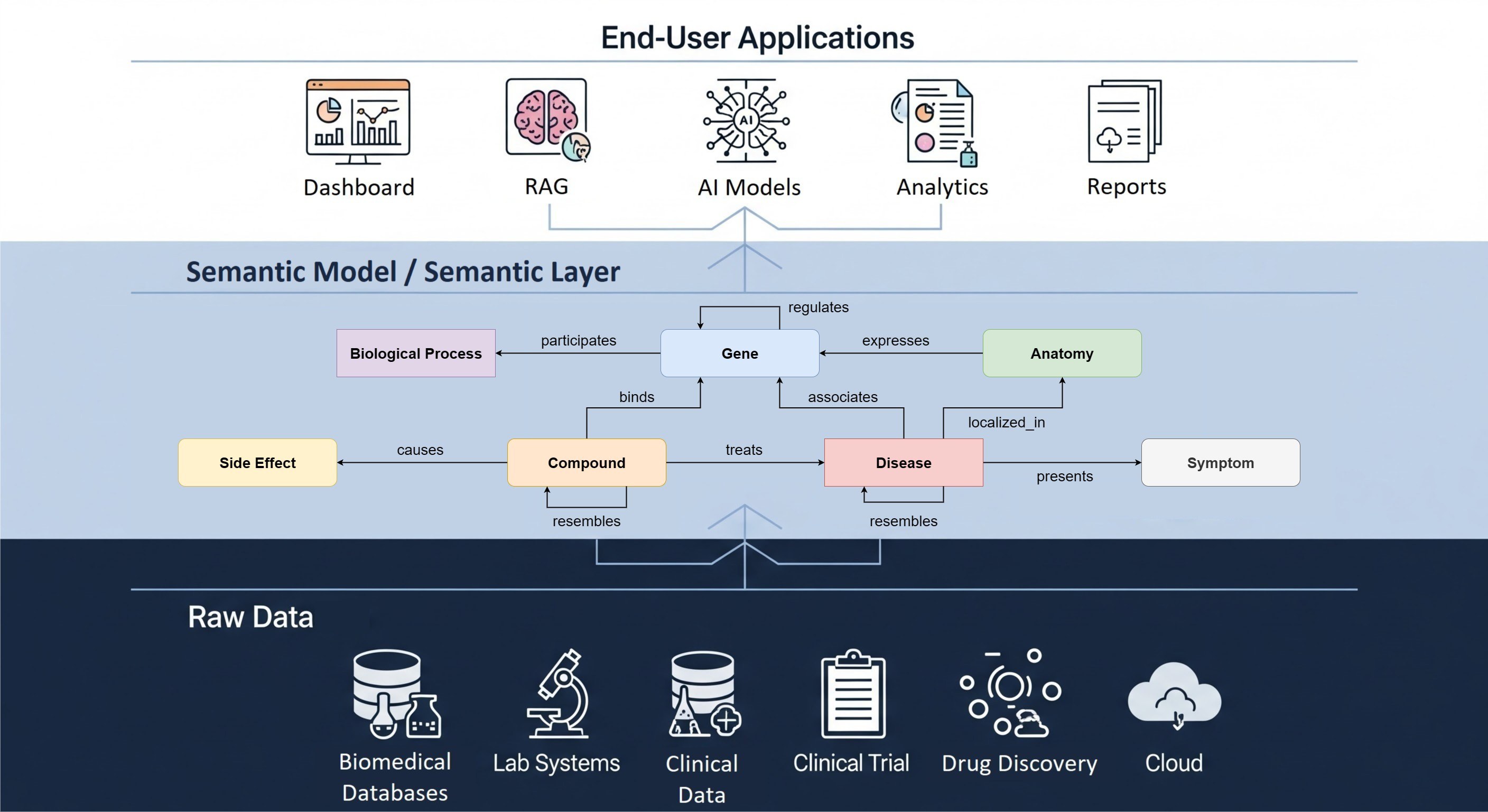
What is object-centric architecture?
Object-centric architecture decomposes complex scenes or datasets into modular, independent entities. Instead of treating data as a flat, monolithic block, this approach isolates distinct objects, allowing each to be processed, understood, and linked separately. This modular structure is essential for AI readiness, as it mirrors how humans perceive the world—not as a single blur, but as a collection of interacting parts.
In traditional relational or monolithic models, data is often locked into rigid tables or dense vectors. Object-centric learning (OCL) shifts this by creating object-level representations. As noted by research on object-centric learning paradigms, this method supports a clear separation of concerns, enabling AI systems to reason about individual entities before synthesizing the whole scene.

By breaking down complexity into discrete objects, systems gain flexibility. An AI can identify, track, and manipulate specific items without reprocessing the entire dataset. This granularity reduces computational waste and improves accuracy, making object-centric architecture the preferred foundation for advanced visual and data-driven applications.
Visual examples of modular data
Object-centric architecture moves beyond flat records by treating distinct entities as independent units. This structure allows systems to manage complexity by isolating changes to specific objects rather than rewriting entire datasets. The approach mirrors real-world logic: you update a single asset without disrupting the broader ledger or database.
Blockchain assets as programmable objects
In blockchain environments like Sui, objects serve as the fundamental unit of data storage. Developers define, create, and manage these programmable objects to represent user-level assets such as tokens or digital items [src-7]. Each object carries its own properties and state, enabling parallel processing and reducing the overhead of global state management. This modularity ensures that transactions affecting one asset do not block operations on others.
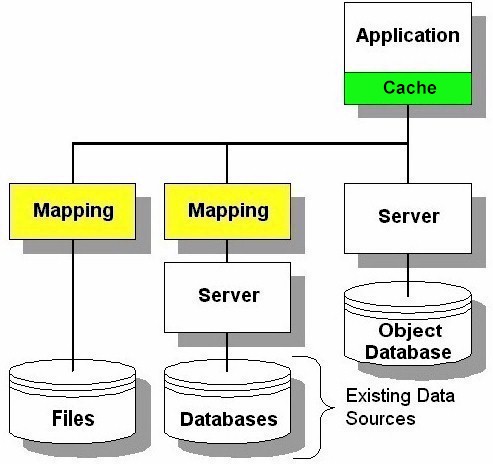
Computer vision entity separation
The same principles apply to visual data processing. Object-centric representations in computer vision isolate individual entities within an image, allowing models to track and recognize specific items independently [src-4]. Instead of analyzing a scene as a single pixel matrix, the system identifies distinct components like vehicles or pedestrians. This separation improves accuracy and computational efficiency, as the AI focuses on relevant features rather than background noise.
Key application areas
The flexibility of object-centric design supports diverse use cases across finance and technology:
Distinct use cases for modular data
-
Asset Tracking
Independent objects allow real-time updates to specific financial instruments without affecting the entire portfolio record. -
Visual Recognition
Isolating entities in images enables precise identification and tracking of individual items within complex scenes. -
Modular Upgrades
Systems can evolve by updating individual object definitions, reducing the risk of widespread integration failures.
Object-Centric vs. Monolithic vs. Relational Architectures
Choosing the right architecture depends on whether your AI needs to understand the world like a human or process data like a ledger. Object-centric architectures decompose scenes into independent entities, allowing models to reason about individual objects and their interactions. This stands in contrast to monolithic models, which treat input as a single opaque tensor, and relational databases, which structure data in rigid rows and columns.
The following comparison highlights how these three approaches differ in data efficiency, causal reasoning, and latency. Object-centric models excel at disentanglement, reducing complex multi-object problems into manageable single-object tasks. This makes them superior for causal representation, where understanding the "why" behind an event is as important as the event itself.
| Dimension | Object-Centric | Monolithic | Relational |
|---|---|---|---|
| Data Efficiency | High: Learns reusable object representations | Low: Requires massive datasets for generalization | High: Structured storage minimizes redundancy |
| Causal Disentanglement | Strong: Isolates object properties and interactions | Weak: Entangled features obscure causal links | None: Schema-driven, not causal |
| Real-Time Latency | Moderate: Inference scales with object count | Low: Fast parallel tensor operations | Low: Optimized for query retrieval |
For applications requiring causal reasoning, such as autonomous navigation or financial risk modeling, the ability to isolate variables is critical. As noted in research from ICLR 2024, object-centric architectures effectively reduce the multi-object problem to a set of single-object disentanglement tasks, leveraging weak supervision from sparse perturbations. This approach allows models to generalize better from limited data compared to monolithic black-box models.
Faster Real-Time Decisioning Through Modularity
Object-centric architecture shifts the focus from processing entire datasets to analyzing individual, distinct entities. This modularity drastically reduces the computational load required for real-time analytics. Instead of scanning a monolithic data blob, the system isolates specific objects and evaluates their properties independently. This approach allows for faster inference times and more accurate, up-to-the-second decisioning.
Research from the University of Manchester highlights that this method is significantly more data-efficient. By leveraging weak supervision from sparse perturbations, the model can disentangle object properties without needing exhaustive training data. This efficiency means the system can adapt to new information in real time, a critical advantage in high-stakes environments where latency matters.
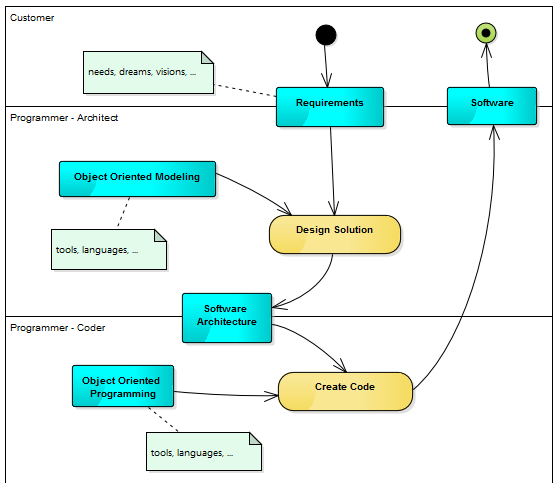
The result is a system that doesn't just process data faster, but understands it better. By breaking down complex scenes into manageable objects, the architecture enables precise, localized adjustments rather than global recalculations. This targeted approach is what makes real-time decisioning both feasible and reliable at scale.
Choosing the right model for your data
Object-centric architecture isn't a universal upgrade; it's a specialized tool for specific structural problems. Standard flat models treat data as a single stream, which works well for simple classification but fails when entities interact in complex, non-linear ways. You should choose object-centric models when your AI needs to understand causal independence between distinct entities rather than just correlations in a global dataset.
This approach mirrors how human infants learn: by identifying separate objects in their environment before understanding the relationships between them. By decomposing complex scenes into discrete, manipulable parts, these models provide the interpretability and granular control that traditional end-to-end neural networks often lack. This is particularly critical in high-stakes environments like finance or healthcare, where understanding the "why" behind a decision is as important as the decision itself.
The trade-off is computational complexity. You gain precision and explainability but lose the simplicity of batch processing. If your use case involves tracking individual items, agents, or assets over time, the object-centric path is the superior choice.
No comments yet. Be the first to share your thoughts!