
Defining object-centric architecture
Object-centric architecture represents a fundamental shift in how data is structured and processed, moving away from the rigid constraints of traditional relational models. In this paradigm, data is organized around discrete, meaningful entities—objects—rather than flat tables or isolated code classes. This approach treats each object as a self-contained unit of information that carries its own context, relationships, and behaviors, making it inherently more adaptable for complex, dynamic systems.
Unlike object-oriented programming, which focuses primarily on the logic and methods that manipulate data, object-centric architecture prioritizes the data itself as the central artifact. It does not merely wrap data in code; it structures the entire data fabric to reflect the real-world entities it represents. This distinction is critical for AI-native applications, where the ability to understand causal relationships and contextual nuances within data is as important as the data points themselves.
Traditional data-centric models often struggle with scalability and semantic clarity because they force diverse information into predefined schemas. Object-centric architecture resolves this by allowing objects to evolve independently while maintaining their connections to other objects. This flexibility enables systems to learn and adapt more effectively, providing a robust foundation for intelligent processing that can handle the complexity of modern business logic and user interactions.
Object-centric architecture vs. data mesh
Data mesh and object-centric architecture often appear in the same conversations about modern data infrastructure, but they solve different problems. Data mesh is an organizational strategy that decentralizes data ownership to domain teams. Object-centric architecture is a structural design that treats data as discrete, causal entities rather than static tables.
The relationship is complementary, not competitive. Object-centric architecture provides the underlying fabric that makes data mesh implementations viable. By defining clear causal relationships between data objects, it enables domain teams to share data without creating a tangled web of dependencies. Data mesh sets the governance; object-centric architecture provides the technical clarity.
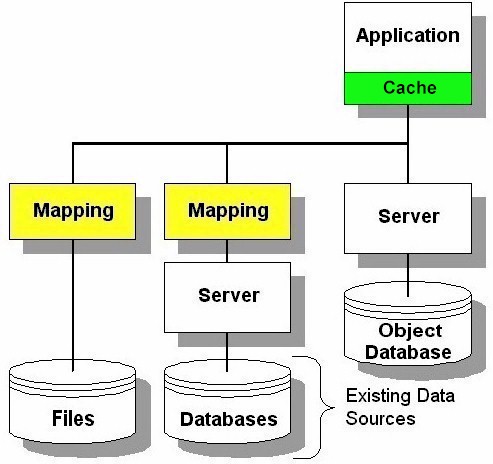
The table below compares their primary focus areas. Data mesh prioritizes organizational boundaries and domain autonomy. Object-centric architecture prioritizes the structural integrity of data objects and their causal links.
| Focus | Ownership | Structure | Primary Goal |
|---|---|---|---|
| Organizational | Domain Teams | Decentralized Domains | Scalable Governance |
| Structural | Object-Centric | Causal Objects | Causal Clarity |
Data mesh relies on standardized data products to enable interoperability. Object-centric architecture ensures those products are built on a foundation of well-defined, disentangled objects. Without this structural clarity, domain teams may struggle to maintain data quality across decentralized boundaries. The object-centric approach reduces the complexity of managing multi-object relationships, making decentralized ownership more manageable.
The real-time object fabric explained
The real-time object fabric serves as the operational layer of object-centric architecture, bridging the gap between static data storage and dynamic AI inference. In this model, objects are treated as first-class citizens within streaming environments, allowing systems to process discrete entities rather than undifferentiated data streams. This shift enables immediate causal inference, where the system understands not just what is happening, but why it is happening, based on the properties and relationships of individual objects.
Traditional batch processing introduces latency that is often incompatible with modern decision-making requirements. By maintaining a continuous, real-time representation of objects, the fabric allows AI models to update their understanding of the world incrementally. This approach is more data-efficient than encoding to a Euclidean space, as it leverages weak supervision from sparse perturbations to disentangle each object's properties [src-serp-1]. The result is a system that can adapt to changes in real-time without the overhead of reprocessing entire datasets.
This architecture supports AI-driven decision-making by providing a consistent, up-to-date view of the domain. Instead of waiting for nightly jobs to aggregate data, the fabric ensures that every object's state is current and accessible. This immediacy is critical for applications where the cost of delay is high, such as fraud detection, dynamic pricing, or autonomous systems. The fabric effectively turns data into a living, breathing asset that evolves alongside the business processes it supports.
Causal Representation in AI Systems
Opaque neural networks often struggle to distinguish between correlation and causation. They learn statistical patterns from high-dimensional data without understanding the underlying mechanisms that drive those patterns. This limitation makes them brittle; a slight shift in environmental conditions can cause their predictions to fail because they have not learned the invariant rules of the system they are observing.
Object-centric architecture solves this by imposing structure on the data. Instead of treating a scene as a flat grid of pixels, the model identifies distinct entities and their properties. This disentanglement allows the AI to reason about cause and effect more effectively. If one object moves, the model understands how that change propagates to others, rather than seeing only a global shift in pixel values.
This approach is significantly more data-efficient. By leveraging weak supervision from sparse perturbations, the model can disentangle object properties with far fewer examples than a standard Euclidean encoder. It learns the "physics" of the scene rather than just memorizing its appearance.
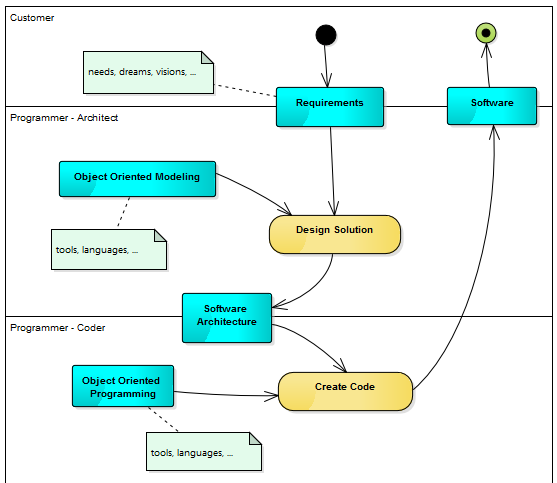
The result is a system that generalizes better. Because it understands the individual components and their interactions, it can apply that knowledge to new situations where the specific objects or backgrounds have changed. This mirrors how humans learn: we understand objects and their behaviors, not just the light hitting our retinas.
Data sovereignty and privacy
Object-centric architecture provides a structural advantage for data sovereignty that monolithic data lakes simply cannot match. By treating information as discrete, self-contained objects with defined boundaries, organizations gain the ability to enforce granular access controls and privacy policies at the source. This approach shifts compliance from a retrospective audit of a massive dataset to a proactive governance model where each unit of data carries its own rules.
In a traditional data lake, data is often siloed in large, undifferentiated blobs. Enforcing privacy requires complex metadata tagging and rigid schema enforcement that often breaks down as data scales. Object-centric design eliminates this ambiguity. Each object defines its own schema and access permissions, ensuring that sensitive information remains isolated and protected regardless of where it moves within the fabric. This granularity allows organizations to comply with regional regulations, such as GDPR or CCPA, by applying policies directly to the data objects subject to those laws.
This structure also simplifies data lineage and auditability. Because every object is a distinct entity, tracking its origin, transformations, and access history becomes a matter of following the object itself rather than reconstructing context from disparate logs. This clarity is essential for maintaining trust and demonstrating compliance to regulators. As highlighted by industry analyses of object-based systems, treating data as programmable, self-describing assets enables more precise control over who can see what, and when.
Common questions about object-centric architecture
Object-centric architecture represents a shift from treating data as flat records to modeling it as distinct, manipulable entities. As AI systems evolve, understanding how this structure supports causal reasoning and efficient learning becomes essential for modern data fabrics.
No comments yet. Be the first to share your thoughts!