
What object-centric architecture means in 2026
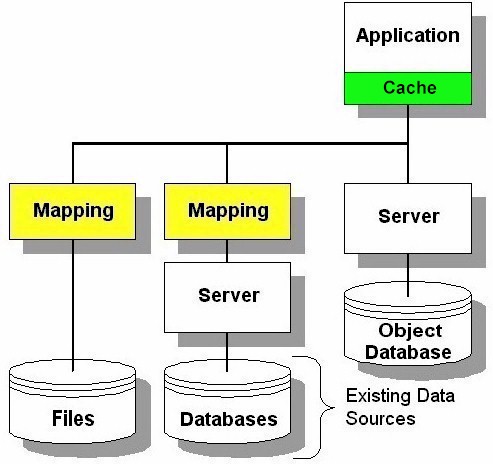
Traditional database models force information into rigid structures. Relational databases rely on rows and columns, while document stores often treat data as massive, unstructured blobs. In both cases, the system sees a table or a file, not the individual things those files represent. This creates friction when you need to track how a specific entity—like a customer, a product, or a sensor reading—changes over time across different systems.
Object-centric architecture shifts this perspective. Instead of organizing data by where it is stored, it organizes data by what it is. Each entity becomes a discrete, addressable object with its own identity and state. Think of it like a digital filing cabinet where every folder has a unique barcode. You don't need to know which shelf the folder is on to find it; you just scan the barcode.
This approach allows for cleaner data management. When an object changes, the change happens to the object itself, not to a row in a table or a field in a document. This makes it easier to trace history, link related items, and maintain consistency across platforms. It turns data into a collection of independent, reusable parts rather than a monolithic block.
Sui blockchain uses objects for asset ownership
Sui approaches blockchain architecture differently by treating digital assets as discrete objects rather than simple ledger entries. This object-centric model allows the network to process transactions in parallel, significantly boosting throughput compared to traditional sequential blockchains. Each object carries its own unique ID and ownership metadata, making it the fundamental unit of value and logic on the network.
In this design, your assets are actual objects owned directly by your address. This structure simplifies ownership transfers and enables complex interactions between different digital items without requiring global state locks. Developers use the Move programming language to define how these objects behave, ensuring that assets can only be modified or transferred according to strict, pre-defined rules.
This direct ownership model has practical implications for scalability and security. Because objects are independent, the network can validate transactions involving different assets simultaneously. This parallel processing capability is essential for supporting high-frequency applications like gaming and decentralized finance, where speed and low latency are critical.
Key features of Sui's object-centric model
-
Direct Ownership
Assets are owned directly by user addresses, simplifying transfer logic and reducing intermediate steps. -
Parallel Processing
Independent objects allow the network to process multiple transactions simultaneously, increasing throughput. -
Move Language
A purpose-built programming language ensures safe and flexible object manipulation with strict type safety.
Microsoft Power Automate applies object-centric mining
Enterprise process mining has long struggled with a blind spot: traditional tools track events, not things. When a single purchase order triggers approvals in finance, shipping in logistics, and invoicing in accounting, event-centric models fracture the story into disjointed logs. Microsoft Power Automate addresses this by applying object-centric process mining (OCPM) to analyze complex processes with multiple interacting objects.
This shift reveals dependencies and bottlenecks that traditional methods miss. Instead of viewing a workflow as a linear sequence of steps, OCPM maps the lifecycle of each object—whether it is a customer, a product, or a transaction. This allows organizations to see the full picture of how different parts of the business interact.
For example, a manufacturing company can track a single unit through assembly, quality control, and distribution. If a bottleneck appears at quality control, OCPM shows exactly which objects are delayed and how it impacts downstream shipping. This granular visibility enables targeted improvements rather than broad, inefficient overhauls.
The result is a more accurate representation of reality. By focusing on the objects themselves, businesses can optimize workflows that involve parallel processes and complex interactions, leading to faster cycle times and reduced errors.
AI models use objects for causal representation
Traditional neural networks often treat images as flat grids of pixels, struggling to understand how individual elements interact. Object-centric architectures change this by breaking scenes into distinct entities. This approach allows machine learning models to identify separate objects and their properties, enabling better causal reasoning.
By disentangling object properties, these models can predict how changes in one part of a scene affect others. For example, if a model understands that a ball is a distinct object from a wall, it can simulate the ball rolling into the wall without confusing the two. This separation is critical for zero-shot segmentation, where the system must identify objects it has never seen before.
Recent research demonstrates that weak supervision from sparse perturbations can effectively train these architectures. By slightly altering parts of an image and observing how the model’s understanding shifts, systems learn to isolate specific object features. This method improves accuracy in complex environments where multiple objects overlap or move independently.
Common questions about object-centric models
Object-centric architecture treats digital assets as distinct, addressable entities rather than entries in a shared ledger. This shift changes how developers build applications and how users interact with their data. Below are specific answers to the most frequent questions about adoption, performance, and AI integration.
Understanding these distinctions helps clarify why object-centric models are gaining traction in 2026. They offer a more modular approach to building decentralized applications, where each component can be updated or moved independently without disrupting the entire network.
No comments yet. Be the first to share your thoughts!