
The shift from tokens to objects
For years, blockchain architecture has been dominated by a simple ledger model. In this traditional setup, data is stored as flat rows of tokens—essentially digital IOUs that track balances across accounts. While effective for basic transfers, this approach struggles with complexity. It treats every asset as a generic unit of value, stripping away the unique properties, history, and internal logic that make digital assets distinct.
Object-centric architecture flips this model. Instead of focusing on the token balance, the system focuses on the object itself. An object is a rich, stateful entity that carries its own data, rules, and history. Think of it as the difference between a bank statement that only lists your total balance and a personal file that contains your entire financial history, including every transaction, receipt, and note attached to specific purchases. The object knows what it is, not just how much it is worth.
This shift is critical for 2026 because it enables parallel processing and scalability. When assets are independent objects, they can be processed simultaneously rather than sequentially. This reduces bottlenecks and allows applications to handle more complex interactions without clogging the network. It transforms the blockchain from a simple calculator into a dynamic engine for complex digital assets.

Sui's Parallel Object Model
Sui treats every asset—whether a game item, a token, or a piece of content—as a distinct object. This object-centric design allows the blockchain to process transactions for independent objects simultaneously. Instead of forcing every user action into a single, sequential line, Sui identifies which objects are involved in a transaction and only locks those specific items. This parallel processing capability is what allows the network to handle thousands of transactions per second without the bottlenecks seen in older architectures.
The result is a system that feels instant to the end user. In gaming and social applications, where hundreds of users might interact with different assets at the same moment, Sui’s model ensures that one user’s activity doesn’t block another’s. This scalability is critical for AI-ready applications that require high-frequency data updates and real-time state changes across millions of entities.
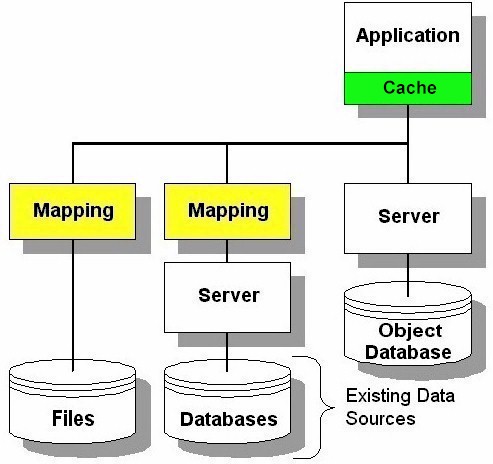
By decoupling transaction execution from a global order, Sui creates a foundation for massive global scale. The architecture naturally supports the distributed nature of modern digital interactions, making it a prime example of how object-centric design solves the throughput problems that have historically limited blockchain adoption.
Handling multiple objects in process mining
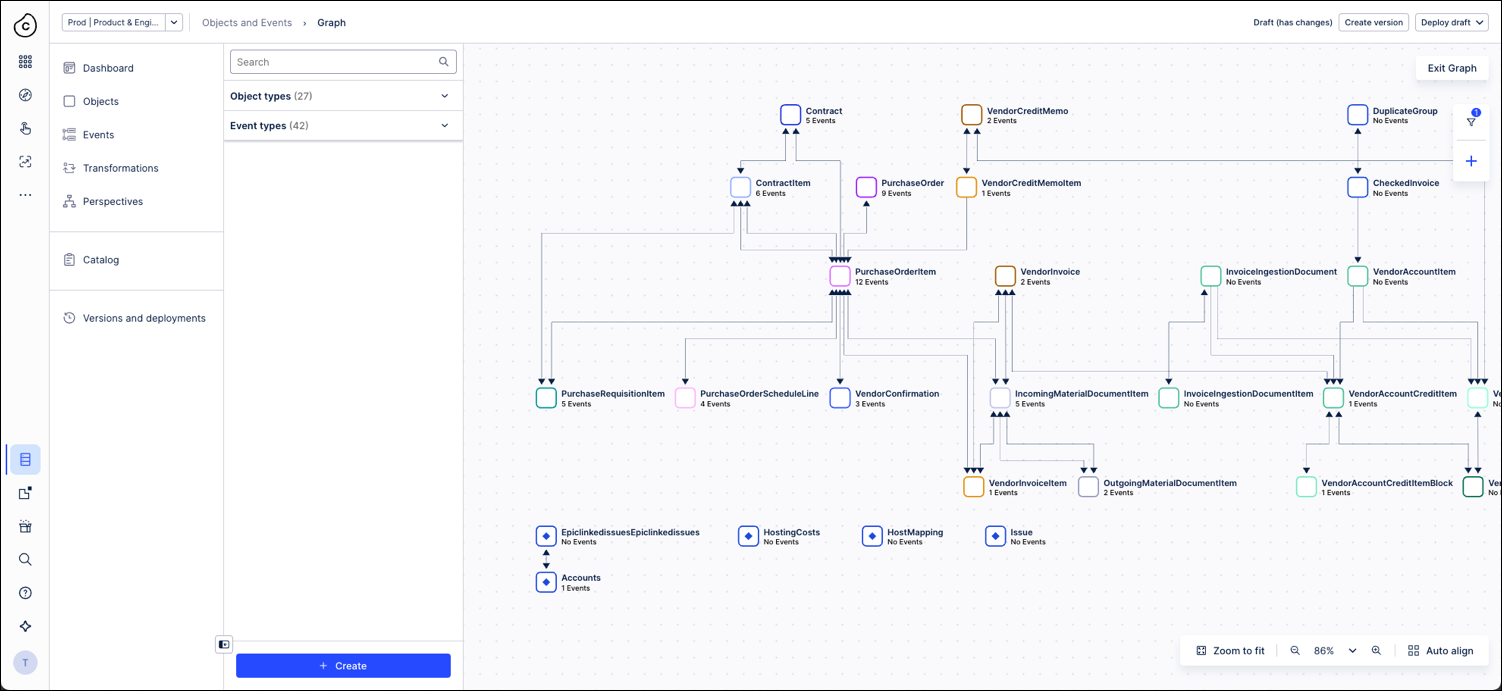
Traditional process mining forces complex workflows into a single linear path, treating every event as part of one main process. This approach breaks down when real-world operations involve several independent entities moving through the same system. Object-centric process mining solves this by tracking each entity separately while mapping the relationships between them.
Imagine a hospital where patients, equipment, and staff all interact. A patient moves through triage, then waits for a specific MRI machine, while the technician moves between rooms. Traditional mining sees this as a tangled mess. Object-centric models keep the patient's journey, the machine's schedule, and the technician's route distinct but linked. This reveals bottlenecks that single-process views miss, such as equipment idle time or staff overload.
Microsoft Power Automate now supports object-centric analysis, allowing enterprises to visualize these multi-entity dependencies. By seeing how objects interact, teams can optimize resources across the entire workflow rather than just one segment.
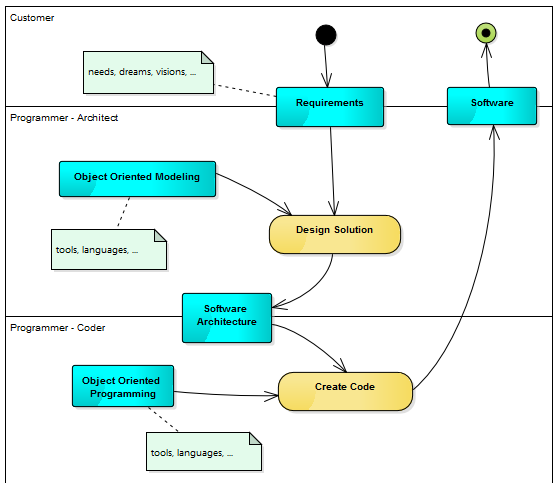
This approach is essential for AI-ready operations. When data is structured around objects rather than rigid processes, machine learning models can better predict outcomes and suggest improvements. It turns chaotic operational data into a clear, scalable map of reality.
AI reasoning from object pixels
Traditional AI models often struggle because they process the world as a stream of abstract tokens or flattened data points. Object-centric architecture changes this by teaching models to see the world as a collection of distinct, interacting entities. Instead of recognizing a "scene," the model identifies individual objects, their properties, and how they relate to one another.
This approach mirrors human perception. When you look at a kitchen, you don't see a single blob of pixels; you see a fridge, a counter, and a person. Object-centric models learn these distinctions directly from raw pixel data, allowing them to reason about physical interactions and causal relationships rather than just statistical correlations.
Learning from interactions, not just labels
The power of this architecture lies in its ability to generalize. Because the model understands objects as independent units, it can predict how they will behave in new situations. For example, a robot trained on object-centric principles can learn that a cup is fragile and will break if dropped, even if it has never seen that specific cup before.
This capability is critical for AI readiness. Systems that reason about objects can adapt to dynamic environments without needing constant retraining. They build a mental map of the world that is both scalable and robust, allowing for more reliable decision-making in complex, real-world scenarios.
Memory efficiency in object design
Object-centric architecture treats memory not as a flat pool, but as a structured system of discrete entities. This approach directly addresses the bottlenecks that slow down modern, scalable software. By aligning data layout with how objects are actually used, developers can drastically reduce cache misses and improve processing speed.
Spatial locality
When related data is stored together, the CPU can fetch it in larger, more efficient blocks. Object-centric design groups properties and methods of a single entity into contiguous memory spaces. This contrasts with traditional systems where data might be scattered across different structures, forcing the processor to jump around in memory. The result is faster access times and less latency, which is critical for applications handling millions of concurrent requests.
Lifetime optimization
Managing how long an object exists in memory is equally important. Research into object lifetime events shows that tracking when objects are created and destroyed allows for more precise memory allocation. Instead of relying on heavy garbage collection cycles that pause execution, object-centric models can predict usage patterns. This leads to smoother performance, especially in high-throughput environments like web browsers or real-time AI inference engines.
Scalability for AI workloads
As software moves toward AI-ready architectures, memory efficiency becomes a primary constraint. Large language models and other AI tools require massive amounts of data to be processed quickly. Object-centric memory management reduces the overhead associated with data movement. By keeping relevant data close to the processing unit, these systems can scale more effectively without requiring proportional increases in hardware resources.
No comments yet. Be the first to share your thoughts!