
What object-centric architecture actually is
Object-centric architecture is a structural paradigm for organizing data into discrete, identifiable units that AI systems can reason about. Unlike traditional object-oriented programming, which bundles data and logic into code classes, or flat data lakes, which store raw, unstructured blobs, this approach treats every entity in your dataset as a distinct object with its own properties and relationships.
The core goal is causal disentanglement. By isolating individual objects from the background noise of a scene or dataset, AI models can learn the specific dynamics of each unit rather than correlating everything at once. This allows for more efficient learning and better generalization, as the system understands the "why" behind data points, not just their statistical presence.
Think of it as moving from a bucket of mixed LEGOs to a sorted bin where each piece is labeled. Traditional data lakes are the bucket; object-centric architecture is the bin. This structure makes data inherently AI-ready because the model doesn't have to figure out what constitutes an "object"—it is already defined.
| Feature | Object-Oriented Programming | Flat Data Lakes | Object-Centric Architecture |
|---|---|---|---|
| Primary Unit | Code Class | Raw Byte Stream | Discrete Data Object |
| Structure | Encapsulated Logic | Unstructured/Flat | Relational & Causal |
| AI Readiness | Low (Requires Parsing) | Very Low (Requires Cleaning) | High (Native Disentanglement) |
| Learning Efficiency | N/A (Static Code) | Low (High Noise) | High (Sparse Perturbations) |
This distinction is critical for modern AI applications. When data is pre-disentangled, models require less computational power to identify patterns, leading to faster training times and more accurate predictions. It shifts the burden from the AI to the architecture itself.
How object-centric architecture differs from legacy data models
Legacy relational databases and flat-file systems were built for a world of predictable, static records. They store information in rigid tables where every row must conform to a predefined schema. This structure works well for simple accounting or inventory lists, but it breaks down when data becomes complex, interconnected, and constantly changing.
Object-centric architecture treats data as a network of real-world entities rather than isolated rows. Instead of forcing relationships into foreign keys that require expensive joins, it preserves the natural connections between objects. This shift moves the focus from static storage to dynamic, causal representation, allowing systems to understand why data exists, not just what it is.
For AI readiness, this distinction is critical. Traditional models require extensive preprocessing to link disparate tables before a machine learning algorithm can find patterns. Object-centric models provide a unified view of events and objects, enabling AI systems to learn directly from the underlying structure of reality. This reduces noise and improves the accuracy of predictive models.
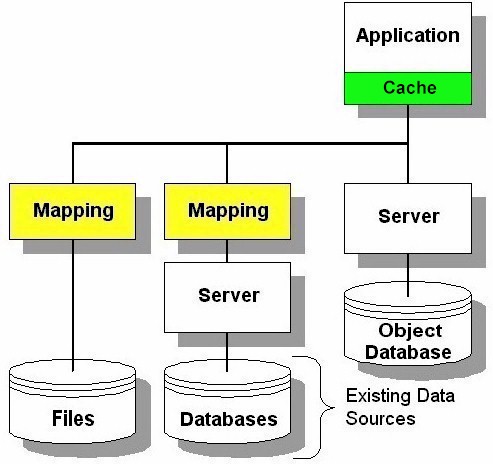
The table below highlights the core technical differences between these two approaches.
| Feature | Legacy Data Models | Object-Centric Architecture |
|---|---|---|
| Structure | Rigid tables with fixed schemas | Flexible graph of interconnected objects |
| Relationships | Foreign keys requiring complex joins | Native links preserving context |
| AI Readiness | High preprocessing needed for pattern recognition | Direct learning from causal structures |
| Scalability | Struggles with non-hierarchical data | Handles complex, evolving relationships easily |
Why AI enterprises are adopting this shift
The transition to object-centric architectures addresses a fundamental bottleneck in modern AI: the inability of traditional models to reason about the world as a collection of independent entities. Standard deep learning systems often encode complex scenes into dense, entangled vectors, forcing models to relearn relationships between objects for every new task. Object-centric architectures change this by explicitly separating the world into distinct, manipulable objects, creating a data structure that mirrors human perception and causal reasoning.
This shift is driven by three primary business and technical advantages: data efficiency, causal clarity, and modular compatibility.
Data Efficiency and Causal Learning
Traditional models require massive amounts of data to understand how changes in one part of a scene affect others. Object-centric approaches significantly reduce this burden. Research from the University of Manchester indicates that these architectures are more data-efficient because they require significantly fewer perturbations to learn causal representations compared to Euclidean encoding methods [src-serp-3]. By reducing the multi-object problem to a set of single-object disentanglement tasks, models can learn robust representations with less computational overhead [src-serp-4].
Modular Data for AI Readiness
Enterprise AI systems need data that is easy to ingest, update, and reason about. Object-centric data provides this modularity. Instead of treating a video or image as a flat grid of pixels, the architecture extracts discrete objects with their own attributes and trajectories. This modularity allows AI models to generalize better across different environments and simplifies the integration of new data sources. It transforms raw sensory input into structured knowledge that downstream applications can query and manipulate directly.
The Core Differentiation
The following comparison highlights the operational differences between traditional encoding and object-centric approaches.
| Feature | Traditional Encoding | Object-Centric Architecture |
|---|---|---|
| Representation | Dense, entangled vectors | Discrete, independent objects |
| Data Efficiency | High data volume required | Fewer perturbations needed |
| Causal Reasoning | Implicit and difficult | Explicit and structured |
| Modularity | Low; hard to isolate | High; easy to manipulate |
By adopting object-centric architectures, enterprises are not just upgrading their models; they are restructuring their data pipelines to support the next generation of AI reasoning. This shift enables systems that are more efficient, more interpretable, and better aligned with the causal nature of the real world.
Implementation tradeoffs and challenges
Adopting object-centric architecture for AI-ready data requires more than just swapping out a data mesh or warehouse. The core challenge lies in the complexity of implementing causal priors. While traditional pipelines rely on explicit schemas and rigid structures, object-centric models must learn to disentangle entities from their context. This shift introduces significant computational overhead and architectural complexity, as the system must infer relationships rather than simply storing them.
The learning curve for data teams
Teams accustomed to traditional data engineering face a steep learning curve. Moving from static tables to dynamic, object-based representations demands a new mental model. Engineers must understand how to design architectures that support scalability without relying on strong, hardcoded priors—a common pitfall in current object-centric learning research [1]. This transition is not merely technical; it requires a fundamental rethink of how data is modeled, queried, and maintained.
Comparison: Traditional vs. Object-Centric
The following table highlights the key differences in implementation and operational focus.
| Aspect | Traditional Data Mesh/Warehouse | Object-Centric Architecture |
|---|---|---|
| Structure | Rigid schemas and tables | Dynamic, entity-based representations |
| Data Relationship | Explicit joins and foreign keys | Inferred causal and contextual links |
| Scalability | High for structured queries | Challenged by strong architectural priors |
| Team Skillset | SQL, ETL pipelines, schema design | Causal inference, representation learning |
When to proceed
Consider this architecture if your AI models require deep contextual understanding of entities rather than just aggregated metrics. However, be prepared for a longer initial development phase. The complexity of implementing causal priors means that early iterations may struggle with scalability, as noted in recent NeurIPS discussions on general-purpose architectures [1]. Start with a pilot project to assess the learning curve for your team before committing to a full-scale migration.
When to choose object-centric architecture
Object-centric architecture shines when your data contains distinct, interacting entities rather than a single, uniform signal. It is the right choice for complex causal inference or multi-agent systems where understanding individual components and their relationships is more important than processing the whole image or dataset as a blob. By disentangling objects, you reduce a multi-object problem into a set of single-object tasks, making the model significantly more data-efficient.
However, this architecture is often overkill for simple classification tasks or monolithic data streams where object boundaries are ambiguous or irrelevant. If your primary goal is to categorize an entire scene without needing to understand the internal mechanics of its parts, a standard data-centric or flat neural network will be faster and cheaper to train.
Use the comparison below to decide if the added complexity is justified for your specific use case.
| Feature | Object-Centric Architecture | Traditional Data-Centric |
|---|---|---|
| Best For | Multi-agent systems, causal reasoning, interactive environments | Image classification, sentiment analysis, monolithic data streams |
| Data Efficiency | High – learns from sparse perturbations per object | Lower – requires massive datasets for global patterns |
| Interpretability | High – isolates specific object properties | Low – treats input as a unified vector |
| Complexity | High – requires architectural priors and disentanglement | Low – straightforward end-to-end training |
No comments yet. Be the first to share your thoughts!