
Defining object-centric architecture
Object-centric architecture is a design pattern that structures software systems around discrete, autonomous entities rather than centralized data stores or monolithic processes. In this model, each object encapsulates its own state, behavior, and lifecycle, functioning as an independent unit within the broader system. This approach contrasts sharply with traditional service-oriented architectures, where services often rely on shared databases or tightly coupled interfaces to coordinate actions.
The core principle is data locality and causality. By keeping data and the logic that operates on it within the same boundary, object-centric systems reduce the need for complex inter-service communication. This mirrors how humans perceive the world: we identify distinct objects and their relationships, rather than processing raw, unstructured data streams. This structural clarity simplifies reasoning about system behavior and makes it easier to predict how changes in one part of the system will affect others.
Key characteristics include:
- Autonomy: Each object manages its own state transitions without external interference.
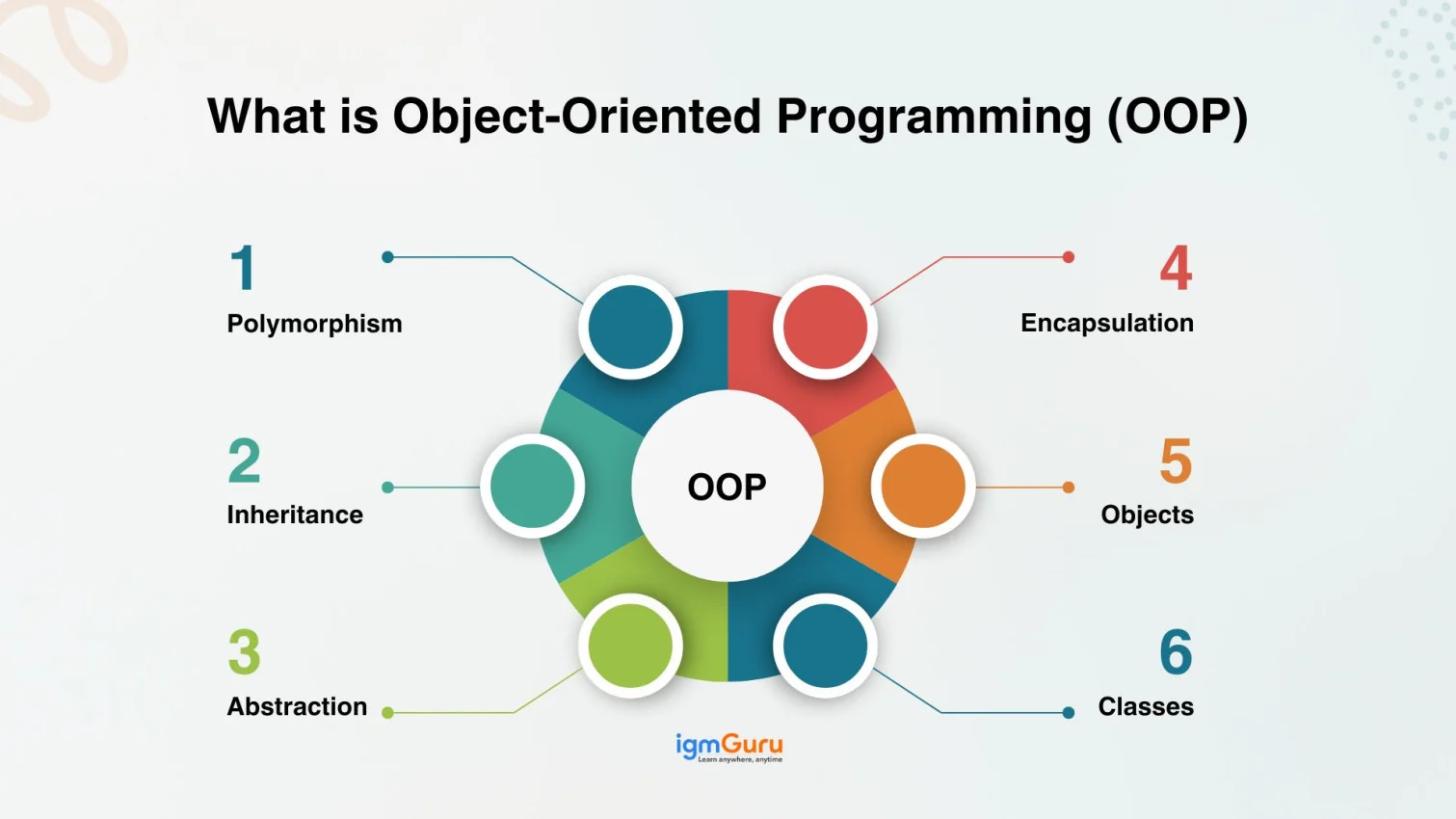
- Encapsulation: Internal details are hidden, exposing only necessary interfaces.
- Composition: Complex behaviors emerge from the interaction of simpler, well-defined objects.
This paradigm is particularly useful in domains requiring high modularity and clear separation of concerns, such as complex business processes or real-time simulation systems.
Core components and data isolation
Object-centric architecture restructures systems by treating individual entities as self-contained units. Instead of relying on monolithic data models or shared global state, this approach isolates state and behavior within distinct objects. This isolation is the primary mechanism for reducing coupling, allowing different parts of the system to evolve independently without breaking interconnected dependencies.
Encapsulation of State and Behavior
At the heart of this architecture is the object itself, which bundles data with the functions that operate on that data. This encapsulation ensures that an object’s internal state is only accessible through defined interfaces. By restricting direct access to internal variables, the system prevents unintended side effects and maintains data integrity. The object becomes a reliable boundary, managing its own lifecycle and exposing only what is necessary for interaction.
Data Isolation and Scalability
Isolating data within objects drives scalability by limiting the scope of changes. When a system is built on isolated components, updates or scaling efforts can be applied to specific objects without affecting the entire application. This modularity simplifies debugging and testing, as issues are contained within well-defined boundaries. As the system grows, new objects can be added or existing ones modified with minimal risk to the overall architecture.
Reducing Coupling Through Independence
The independence of objects reduces coupling by minimizing direct references between components. Objects communicate through explicit messages or events rather than shared mutable state. This decoupling makes the system more resilient to change, as modifications to one object’s implementation do not ripple through the rest of the system. The result is a more maintainable and flexible architecture that can adapt to evolving requirements with greater ease.
Implementing Object-Centric Patterns
Building an object-centric architecture requires shifting from monolithic data structures to modular, independent entities. This approach treats each object as a self-contained unit with its own state and behavior, reducing coupling and improving maintainability. Developers must define clear boundaries between these objects to prevent state leakage and ensure that interactions remain predictable.
Define Clear Object Boundaries
The foundation of this architecture is strict encapsulation. Each object should manage its own internal state and expose only necessary interfaces to the outside world. This prevents unintended side effects where changes in one part of the system inadvertently corrupt data in another. By treating objects as black boxes, you simplify debugging and allow teams to work on different components in parallel without stepping on each other's code.
Structure Data for Modularity
Data structures should reflect the natural relationships between objects rather than adhering to rigid relational schemas. Use composition over inheritance to build complex entities from simpler ones. This allows you to mix and match behaviors dynamically. For example, a User object might compose a Profile and a Settings object, rather than inheriting properties from a massive base class. This structure supports scalability and makes it easier to swap out implementations without breaking dependent systems.
Implement Event-Driven Communication
Objects should communicate through events rather than direct method calls. This decouples the sender from the receiver, allowing for asynchronous processing and better fault tolerance. When an object changes state, it emits an event that other interested objects can listen to. This pattern enables loose coupling and makes the system more resilient to changes. It also facilitates observability, as you can track the flow of events through the system to understand how data moves and transforms.
Validate with Integration Tests
Finally, validate the architecture through integration tests that simulate real-world interactions between objects. These tests should verify that objects maintain their boundaries and that event-driven communication works as expected. Focus on testing the interfaces and contracts between objects, rather than their internal implementations. This ensures that the modular design holds up under load and that changes to one object do not break others.
Why this approach suits AI-ready systems
Object-centric design aligns naturally with the structural demands of modern AI workloads. By isolating entities and their attributes into discrete, independent slots, the architecture reduces the complexity of the latent space. This separation allows models to learn causal representations more efficiently, focusing on the underlying generative factors rather than correlational noise in pixel data.
The primary advantage lies in data efficiency. Research indicates that object-centric architectures require significantly fewer perturbations to disentangle object properties compared to approaches that encode directly into a Euclidean space. This efficiency stems from the model's ability to leverage weak supervision from sparse perturbations, isolating each object's properties without needing exhaustive labeled datasets for every possible interaction.
Modularity further enhances training stability. Because each object is represented independently, models can be updated or retrained on specific entities without reprocessing the entire dataset. This granular control supports scalable AI systems that need to adapt to new objects or changing environments without catastrophic forgetting or massive computational overhead.
Common questions about object-centric design
What is object-centric?
Object-centric design shifts the focus from isolated events or flat data streams to individual entities. Instead of viewing a process through a single two-dimensional lens, this approach allows developers to analyze multiple object types simultaneously, capturing how they interact and influence each other in real time.
What is an object-centered representation?
In an object-centered representation, the position and properties of subparts are encoded relative to a central origin specific to that object. This structure mirrors how humans and primates naturally process spatial information, allowing systems to disentangle complex interactions and maintain causal clarity without relying on dense, global state management.
Why use this architecture?
Object-centric architectures enable efficient causal representation by leveraging weak supervision from sparse perturbations. This method disentangles each object's properties, reducing computational overhead and improving modularity. The result is a system that scales better and handles complex, multi-entity workflows with greater precision than traditional flat models.
No comments yet. Be the first to share your thoughts!