
What is object-centric architecture?
Object-centric architecture is a modeling approach where AI systems represent the world as distinct, interacting entities rather than flat feature vectors or unstructured blobs. Instead of treating an image as a single matrix of pixels, the system learns to isolate individual objects, their attributes, and their relationships. This mirrors how humans perceive reality—seeing a dog, a ball, and their spatial connection—rather than processing raw sensory data as a monolithic stream.
In 2026, this shift moves beyond simple computer vision. Modern object-centric models disentangle properties through weak supervision, using sparse perturbations to identify what makes one object different from another. This allows AI to reason causally about scenes, predicting how moving one object affects the rest of the environment. It replaces the traditional database paradigm of storing static records with a dynamic, relational understanding of entities and their states.
The primary advantage is interpretability. Traditional models often act as black boxes, making it difficult to trace why a decision was made. Object-centric architectures provide a structured intermediate representation, making it easier to audit, debug, and trust AI outputs. This clarity is essential for applications where accountability matters, such as autonomous navigation or medical imaging.
Tradeoffs in object-centric architecture
Moving from traditional relational databases to object-centric models introduces specific engineering decisions. The shift is not merely about storage format but about how data is queried, updated, and maintained over time. Teams must weigh the complexity of managing dynamic object states against the benefits of modular, AI-driven representation.
The core tension lies between rigid schema enforcement and flexible, emergent structures. Traditional databases offer predictability and strong consistency, which are essential for financial transactions or audit trails. Object-centric architectures, by contrast, prioritize adaptability. They allow systems to evolve as new object attributes or relationships emerge without requiring costly schema migrations.
To help evaluate this shift, consider the following comparison of operational characteristics across different data management approaches.

| Feature | Traditional Relational | Object-Centric AI | Knowledge Graph |
|---|---|---|---|
| Schema Flexibility | Rigid, pre-defined | Dynamic, emergent | Moderate |
| Query Complexity | SQL (high for joins) | Vector/semantic search | Path traversal |
| Update Cost | Low for single rows | High for state drift | Moderate |
| AI Integration | Requires external embedding | Native, internal | External layer |
| Consistency | Strong (ACID) | Eventual/BASE | Strong |
The table above highlights that no single architecture solves every problem. Traditional relational databases remain the gold standard for transactional integrity. Graph databases excel at navigating complex, many-to-many relationships. Object-centric models shine when the goal is to capture semantic meaning and allow AI agents to reason about entities in a flexible, modular way.
Choosing the right path depends on your primary workload. If your system requires strict consistency and predictable query patterns, stick with relational models. If you are building an AI agent that needs to understand and manipulate complex, evolving entities, an object-centric approach may reduce the friction of integration and improve reasoning accuracy.
Key evaluation factors
-
Query Patterns
Determine if your queries are structural (SQL) or semantic (vector). Object-centric models favor semantic retrieval. -
Data Volatility
Highly dynamic data with frequent schema changes benefits from the flexibility of object-centric representations. -
AI Reasoning Needs
If AI agents must manipulate objects as atomic units, object-centric architecture provides native support for this workflow.
Choosing the right architecture for your data model
Traditional databases force you to flatten complex realities into rigid tables. Object-centric architecture flips this by storing data as it naturally exists: as interconnected objects with behaviors and relationships. This shift isn't just about storage; it's about aligning your database with how AI models perceive and process information.
The decision comes down to whether your application benefits from the flexibility of object models or the strict consistency of relational structures. Here is a practical framework to decide which path fits your specific use case.
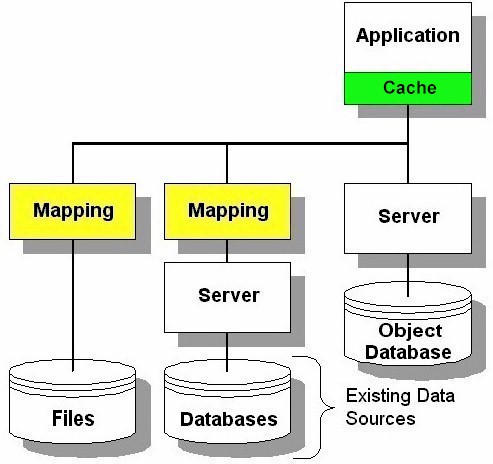
If your data involves nested attributes, polymorphic relationships, or frequent schema changes, object-centric models reduce the friction of mapping. Relational databases require complex joins that slow down as relationships deepen. Object models keep related data together, simplifying retrieval for complex entities.
AI-driven applications often require data that preserves semantic context. Object-centric architectures enable efficient causal representation by disentangling object properties through weak supervision. If your AI models need to reason about individual objects and their interactions, this architecture provides a native fit that traditional tables cannot.

Relational databases excel at strict ACID compliance for transactional integrity. If your primary concern is financial accuracy or simple, high-volume insertions where schema rarely changes, stick with SQL. Object-centric models introduce complexity in consistency management that may be unnecessary for straightforward CRUD operations.
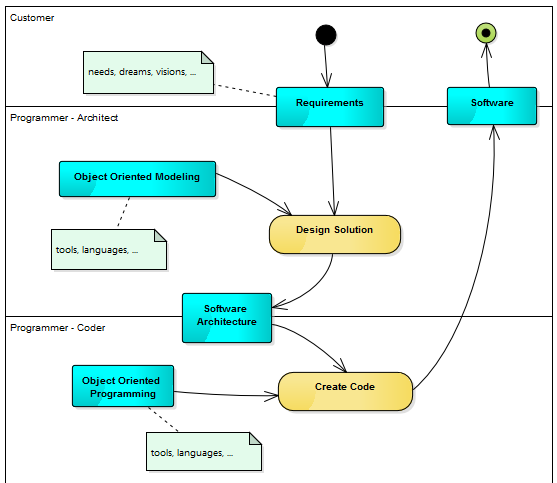
Object-centric approaches often align better with modern object-oriented programming languages. This reduces the impedance mismatch between your code and your database. Teams can move faster when they aren't constantly translating between relational rows and application objects, though the learning curve for new architectural patterns is steeper.
The choice between these architectures is rarely binary. Many successful systems use a hybrid approach, leveraging relational databases for transactional cores and object-centric models for AI-driven insights. Start by identifying the bottleneck in your current data flow. If it's complexity, move to objects. If it's consistency, stay relational.
Spotting the weak options in object-centric AI
Not every object-centric model is ready to replace a traditional database. The hype often obscures the fact that these systems are still experimental. Many vendors claim their models offer perfect causal reasoning, but the reality is more nuanced. You need to look past the marketing and check the actual architectural constraints.
The primary weakness lies in how these models handle weak supervision. Research shows that while sparse perturbations can help disentangle object properties, they do not guarantee robust causal representation in complex, real-world datasets [src-serp-1]. This means your AI might mistake correlation for causation, leading to flawed decisions.
When comparing options, focus on three critical tradeoffs. First, consider the computational cost of inference. Object-centric models often require significantly more processing power than standard relational queries. Second, evaluate the data requirements. These models thrive on structured, perturbed data, which is rare in legacy systems. Third, look at the failure modes. When an object is occluded or partially visible, many models fail to maintain identity, causing data integrity issues.
Avoid platforms that promise "zero-config" deployment. Object-centric architecture requires careful tuning of disentanglement parameters. If a vendor cannot explain how they handle occlusion or property binding, it is a weak option. Stick to solutions that provide transparent metrics on causal accuracy and computational efficiency.
No comments yet. Be the first to share your thoughts!