
What is object-centric architecture?
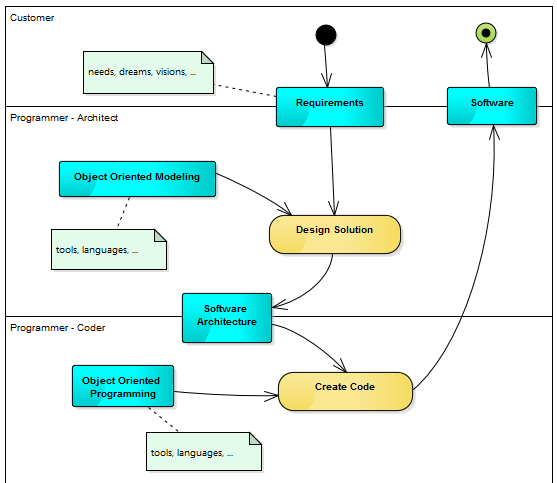
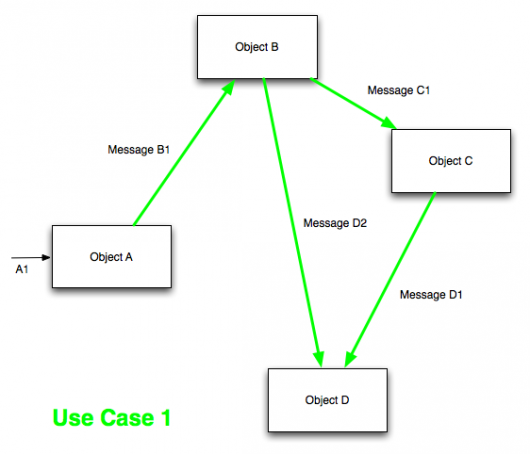
Object-centric architecture is a design paradigm where data is organized around persistent, unique objects rather than transactions, services, or flat data tables. In this model, every entity—whether it’s a user profile, a digital asset, or a game item—is a first-class citizen with its own identity, state, and lifecycle. This stands in contrast to traditional object-oriented programming, where objects are often transient containers for logic, and data-centric models, where data is stored in rigid schemas and accessed via centralized queries.
The shift toward object-centric design is driven by the needs of AI-native systems. Modern AI applications require data that is modular, composable, and easily accessible by multiple agents or services simultaneously. By treating data as independent objects, systems can achieve higher concurrency and better scalability. For example, in blockchain platforms like Sui, object-centric architecture allows for parallel transaction processing because each object can be updated independently without locking the entire database. This is a significant departure from traditional relational databases, where locking mechanisms often create bottlenecks.
In computer vision, object-centric approaches are equally transformative. Instead of processing an entire image as a single blob, AI models identify and track individual objects within the scene. This allows for more nuanced understanding and interaction with the environment. Research presented at ICLR highlights how object-centric representations enable AI to generalize better across different contexts, as the model learns about discrete entities rather than pixel-level correlations.
Ultimately, object-centric architecture provides a flexible foundation for building complex, AI-driven systems. By decoupling data from rigid structures, it enables more efficient data flow and easier integration of diverse AI services.
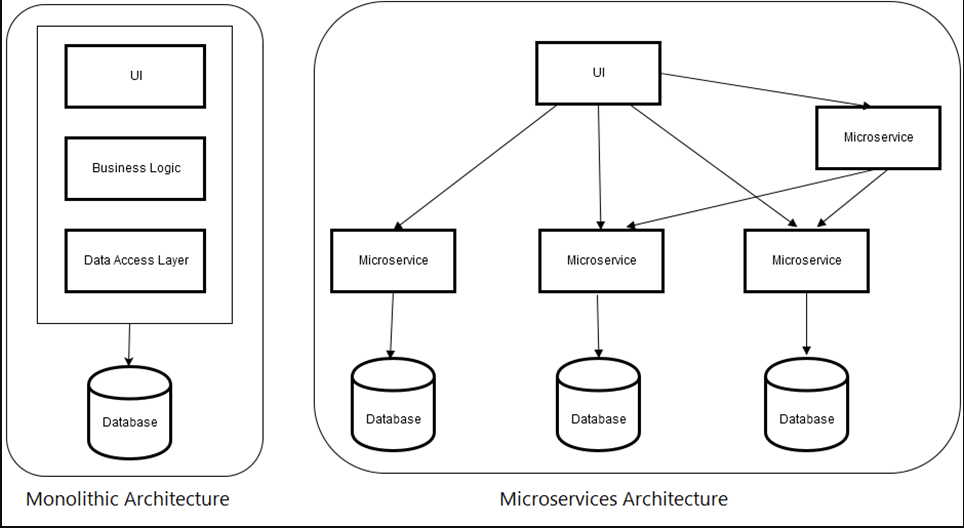
Microservices vs. Object-Centric Architecture
The shift toward AI-native systems is exposing the friction in legacy microservices architectures. While microservices excel at scaling independent business logic, they struggle with the data coherence required for modern machine learning workloads. Object-centric architectures offer a different approach by treating entities as first-class citizens, allowing AI models to interact with structured, disentangled representations of reality rather than opaque API endpoints.
Data Consistency and State Management
In a traditional microservices model, data is siloed. A single real-world entity, such as a user or a transaction, is fragmented across multiple services. To build an AI model that understands this entity, engineers must write complex ETL pipelines to stitch these fragments back together. This introduces latency and consistency risks. Object-centric architectures maintain the entity as a unified object. This reduces the cognitive load on AI agents, which can query a single, consistent state rather than coordinating across dozens of distributed services.
AI Integration and Reasoning
AI-native applications require reasoning over relationships, not just data retrieval. Research from ICLR highlights that object-centric architectures enable efficient causal representation learning by disentanglement. By structuring data around objects, AI models can more easily isolate variables and understand cause-and-effect relationships. This is critical for applications like computer vision or autonomous agents, where understanding the interaction between distinct objects is more valuable than processing raw pixel data or unstructured logs.
Operational Complexity
Microservices reduce deployment complexity but increase operational complexity. Debugging a failure that spans multiple services requires tracing requests across a sprawling network. Object-centric systems, often built on actor-model foundations like Sui, simplify this by encapsulating state and behavior within the object itself. If an object fails, the failure is contained. This makes the system more predictable for AI agents that rely on deterministic outcomes for decision-making.
| Dimension | Microservices | Object-Centric Architecture |
|---|---|---|
| Data Model | Fragmented, service-specific schemas | Unified, entity-centric objects |
| AI Readiness | Requires complex data stitching | Native support for disentanglement |
| State Consistency | Eventual consistency across services | Strong consistency within object |
| Debugging | Distributed tracing across many hops | Localized to object state transitions |
| Scalability | Horizontal scaling of compute | Vertical scaling of object logic |
The tradeoff is clear: microservices offer flexibility in deployment but add friction for AI integration. Object-centric architectures reduce this friction by aligning the data structure with the reasoning needs of AI models. As AI applications move from simple classification to complex reasoning, the architectural choice becomes less about scaling compute and more about scaling understanding.
How AI-Native Systems Use Objects
Traditional AI models often treat data as a flat, undifferentiated stream of pixels or tokens. Object-centric architecture shifts this by forcing the model to identify discrete entities within that stream. This structural choice is not merely aesthetic; it is a functional requirement for modern AI systems that need to understand causality rather than just correlation.
By isolating individual objects, the system can learn to disentangle their properties independently. This means the model understands that an object’s color is distinct from its shape, and its position is separate from its motion. This disentanglement is critical for efficiency. Research from ICLR demonstrates that object-centric architectures reduce the multi-object problem into a series of single-object disentanglement tasks, significantly lowering the computational complexity required to make sense of complex scenes.
This approach is particularly data-efficient. Because the architecture leverages weak supervision from sparse perturbations, it requires far fewer data points to learn robust representations compared to standard Euclidean encoding methods. The model doesn't need to see every possible variation of every object to understand the underlying rules of interaction.
The practical implications are visible in both computer vision and blockchain infrastructure. In vision, it allows models to track entities through occlusion more reliably. In blockchain systems like Sui, it enables parallel transaction processing by treating assets as independent objects rather than locking state in a monolithic ledger. This architectural shift allows AI-native systems to scale without the brittleness of older, monolithic designs.
When to adopt object-centric design
Object-centric architecture is not a universal upgrade. It is a specific solution for systems where data mobility and identity are more critical than rigid table structures. You should consider this shift when your application demands high consistency, complex state transitions, or deep AI integration.
The primary driver is the move toward AI-native systems. Traditional relational models struggle with the unstructured, evolving data that AI models require. Object-centric designs treat data as independent, movable entities. This allows AI agents to retrieve, modify, and pass data across services without breaking referential integrity. For example, in computer vision research presented at ICLR, object-centric representations allow models to identify and manipulate individual entities in a scene independently, leading to more robust generalization.
Blockchain platforms like Sui demonstrate the mechanical advantages of this approach. By modeling data as objects with clear ownership and capabilities, Sui enables parallel transaction processing. This contrasts with account-centric models where transactions must be processed sequentially to prevent state conflicts. If your system involves high-throughput interactions where multiple users or agents modify related data simultaneously, the object model reduces contention.
However, the complexity cost is real. Object-centric systems require careful design of object lifecycles and ownership rules. If your application is a simple CRUD backend with minimal state changes, a relational database remains the pragmatic choice. Adopt object-centric design only when the benefits of data mobility and parallelism outweigh the architectural overhead.
Common questions about object-centric models
Transitioning to an object-centric architecture often raises specific technical doubts, particularly for teams coming from legacy data-centric or traditional object-oriented backgrounds. Understanding how these models handle concurrency and data flow is essential for successful implementation.
No comments yet. Be the first to share your thoughts!