
Why objects beat tables in 2026
The relational database has served enterprise software well, but its rigid schema is becoming a bottleneck for AI agents. Tables force data into flat rows and columns, requiring complex joins to reconstruct relationships that are naturally hierarchical or interconnected. For an AI agent trying to understand context, navigating a graph of objects is more intuitive than querying normalized tables.
Object-centric architectures treat data as discrete, self-contained entities with properties and behaviors. This approach mirrors how humans perceive the world. Instead of seeing a "Customer" and an "Order" as separate tables linked by an ID, an object-centric model sees a Customer who has Orders. This semantic richness allows AI agents to reason about data without extensive preprocessing.
The decoupling inherent in object models also simplifies maintenance. When business requirements shift, you can modify an object’s internal structure without breaking the entire schema. This flexibility is essential in 2026, where AI-driven workflows demand rapid iteration and adaptability.

Real-time sync without the lock
Traditional monolithic databases treat data as rows in shared tables. When two users edit the same record simultaneously, the database forces a lock, slowing down the application and often leading to stale data or lost updates. Object-centric architecture changes this by treating every entity—be it a user profile, a transaction, or a document—as an independent, self-contained unit.
1. Independent Object Identification
In an object-centric model, every piece of data has a unique identifier. This means the system doesn't need to scan entire tables to find a specific record. Instead, it can locate and address individual objects directly. This granularity allows the system to track changes at the object level rather than the row level, providing precise control over data interactions.
2. Concurrent Access Without Blocking
Because objects are independent, multiple users can interact with different objects at the same time without interfering with each other. Even if two users are editing related data, the system can process these updates concurrently. This eliminates the bottleneck of shared locks, allowing for high-throughput, real-time synchronization that scales with user demand.
3. Immediate State Propagation
When an object is updated, the change is immediately visible to all connected clients. There is no need for polling or complex conflict resolution mechanisms typically found in relational databases. The system pushes the new state to all relevant services and users, ensuring that everyone sees the most current version of the data. This is critical for AI-driven enterprises where decision-making relies on up-to-the-second information.
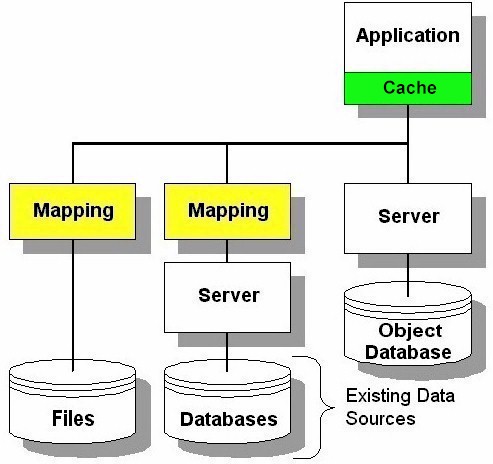
Start by defining the unique boundary of each data entity. In object-centric architecture, you treat a "customer" or an "order" as a single, atomic unit with its own lifecycle, rather than splitting it across multiple normalized tables.
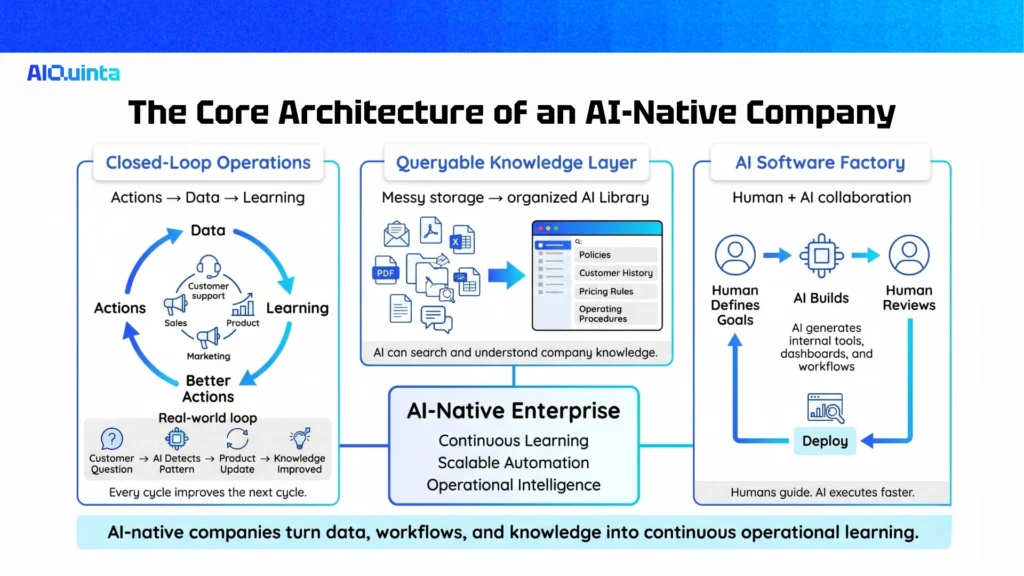
Every object receives a globally unique identifier. This allows the system to reference, retrieve, and update specific objects without scanning or joining large datasets, significantly reducing latency during high-concurrency operations.
Since objects are independent, multiple transactions can modify different objects simultaneously. The system uses optimistic concurrency control, allowing updates to proceed without locking, which dramatically increases throughput and reduces wait times for users.
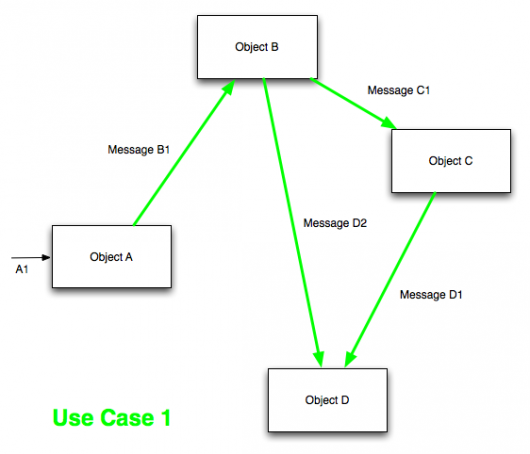
When an object is updated, the change is immediately broadcast to all dependent services and clients. This real-time synchronization ensures that AI agents and user interfaces always reflect the current state of the data without manual refreshes.
Decoupling microservices for AI
Object-centric architecture removes the rigid boundaries that typically force AI models to navigate complex service topologies. Instead of relying on brittle API calls to disparate backend services, AI agents interact directly with specific data entities. This shift changes how data moves through the system, allowing models to focus on the meaning of the data rather than the mechanics of its location.
How object interaction works
In a traditional monolithic or tightly coupled microservice setup, an AI model often needs to know which service holds the customer data, which service manages inventory, and how to stitch those responses together. This requires the AI to understand the internal wiring of the application.
Object-centric design flips this. Data is wrapped in self-contained objects with clear interfaces. An AI agent requests a "customer record" and receives a structured object. It does not need to know if that data lives in a SQL database, a NoSQL store, or a legacy mainframe. The object is the contract, not the service endpoint. This decoupling allows AI models to compose responses from multiple sources without being blocked by service dependencies.
Visualizing the shift
The difference is visible in how data flows. In a coupled system, the AI acts as a traffic cop, directing requests to the right service. In an object-centric system, the AI acts as a consumer, pulling available objects into its context window. This reduces latency and error rates, as the AI no longer needs to handle service discovery failures or version mismatches between microservices.
Key benefits of this approach
Adopting this architecture offers several practical advantages for enterprise AI integration:
Benefits of object-centric decoupling
-
Reduced AI Complexity
Models interact with standardized data shapes, eliminating the need for complex service orchestration logic. -
Faster Iteration
Teams can update or replace underlying microservices without breaking AI integrations, as long as the object interface remains stable. -
Improved Data Governance
Objects encapsulate validation and access rules, ensuring AI models only interact with authorized and clean data.
Common migration mistakes
Moving from a monolithic SQL database to an object-centric architecture is rarely a simple lift-and-shift. The biggest hurdle is not the technology itself, but how we model relationships. When teams treat objects as mere containers for data, they miss the semantic context that makes these models powerful.
Over-normalization traps
Engineers often default to third-normal-form habits, breaking objects into tiny, disconnected tables. This creates a web of joins that kills performance and obscures the domain model. An object should represent a cohesive concept—like an Order or Customer—with all its relevant state attached. Splitting these apart forces the application to reconstruct reality at runtime, adding latency and complexity.
Ignoring semantic context
Data without context is just noise. A common pitfall is storing attributes as flat fields without linking them to the specific perspective or lifecycle stage of the object. For example, a price field means something different in a Quotation versus an Invoice. If the model doesn't capture this distinction, you lose the ability to query or process objects accurately across different business views.
Treating migration as a one-time event
Another frequent error is assuming the schema is static. In an object-centric world, objects evolve. Features are added, relationships change, and new perspectives emerge. If your migration plan doesn't account for versioning or backward compatibility, you risk breaking existing integrations the moment you deploy the new model.
Skipping the relationship audit
Before writing code, map the relationships. Identify which objects interact frequently and which are loosely coupled. This helps you design a graph that reflects actual usage patterns rather than theoretical purity. A well-structured object model reduces cognitive load for developers and improves query performance by keeping related data together.
Your 2026 implementation checklist
Transitioning to object-centric architecture requires shifting from monolithic data dumps to discrete, interacting entities. This checklist guides enterprise architects through the critical phases of readiness, focusing on concrete evaluation criteria for 2026.

Identify fragmented data sources that currently obscure object relationships. Map existing tables to potential real-world entities, noting where coupling prevents independent scaling or analysis. This audit reveals the "monolith" boundaries you need to dismantle.
Establish clear interfaces for each object, ensuring properties and behaviors are encapsulated. Use weak supervision from sparse perturbations to validate that each object’s properties can be disentangled and analyzed independently, a core requirement for causal representation.
Document how objects communicate and change state over time. Move beyond static schemas to dynamic interaction models. This step ensures your architecture supports the complex, multi-perspective analysis required for modern AI readiness.
Test your new structure against zero-shot segmentation or classification tasks. If the object-centric framework enhances patch representations using object-level information, your design is likely sound. This validation proves the architecture’s efficiency before full-scale deployment.
Ensure your data architecture supports governed, scalable analytics. Object-centric models naturally lend themselves to modular AI initiatives, allowing teams to deploy and update specific object behaviors without disrupting the entire system. Prepare your infrastructure for this level of agility.
Implementing this checklist ensures your enterprise is not just adopting new terminology, but building a resilient, future-proof architecture capable of handling the complexities of 2026 and beyond.
No comments yet. Be the first to share your thoughts!