
What object-centric architecture means now
Object-centric architecture 2026 flips the traditional software model on its head. Instead of organizing data around rigid tables or flat documents, this approach treats objects as the primary unit of state and behavior. In this paradigm, an object isn't just a data structure; it is a self-contained entity that owns its own logic, history, and relationships.
Think of it like moving from a filing cabinet to a team of independent experts. In a relational database, you might have a "Customer" table that stores static details. If that customer changes their address, you update a row. In an object-centric system, the customer is an active agent. It carries its own immutable history of changes, allowing the system to track not just what the customer is, but how it evolved over time.
This shift is critical for real-time personalization. When every interaction, preference, and transaction is tied to a specific object, systems can react instantly. There is no need to join multiple tables or reconstruct state from fragmented documents. The object itself holds the context, enabling decisions that are both faster and more accurate.
Platforms like Sui have popularized this design by making objects the basic unit of state, allowing for parallel processing that traditional models struggle to match. By centering architecture around these dynamic entities, developers can build systems that scale naturally with complexity rather than fighting against it.
Designing for Real-Time Personalization
Object-centric architecture 2026 shifts the focus from user sessions to the objects themselves. Instead of treating a user as a static profile, this approach treats every asset, resource, or data point as a first-class citizen with its own identity and lifecycle. This distinction allows systems to track and manipulate individual user objects in real-time, creating a dynamic content architecture that adapts instantly to changing contexts.
1. Identify Core Objects
The foundation of real-time personalization is defining what constitutes an "object." In an object-centric model, an object is a fundamental unit of storage that holds state, attributes, and relationships. Whether it is a user's shopping cart, a specific piece of content, or a preference setting, each object exists independently of the user session. This independence ensures that personalization signals persist across devices and time, providing a consistent experience regardless of how the user interacts with the system.
2. Map Object Relationships
Objects rarely exist in isolation. To enable hyper-personalization, you must map the relationships between these objects. For example, a "product" object might be related to a "user" object through a "view" event, or a "preference" object might influence a "recommendation" object. By understanding these connections, the system can predict how changes in one object will affect others. This relational mapping is crucial for maintaining coherence in personalized experiences, ensuring that recommendations remain relevant and contextually appropriate.
3. Enable Real-Time State Updates
Personalization requires immediate responsiveness. Object-centric models excel here because they allow for real-time state updates without disrupting the entire system. When a user interacts with an object, its state changes instantly, and this change propagates through the mapped relationships. This capability is particularly valuable in high-concurrency environments, where legacy systems often struggle to maintain consistency. By handling concurrent user interactions at the object level, the architecture ensures that personalized content is always up-to-date and accurate.
4. Deploy Dynamic Content Rules
With objects and relationships defined, you can deploy dynamic content rules that react to object state changes. These rules determine how content is assembled and presented based on the current state of relevant objects. For instance, if a "user" object's "location" attribute changes, a rule might trigger a update to the "local offers" object, which then influences the "homepage" content object. This dynamic assembly ensures that users receive content that is not only personalized but also contextually relevant to their immediate situation.
5. Monitor and Iterate
Continuous monitoring is essential for refining personalization strategies. By tracking how objects interact and how users respond to personalized content, you can identify patterns and opportunities for improvement. Object-centric architecture provides detailed visibility into these interactions, allowing you to iterate on your rules and relationships with confidence. This iterative process ensures that your personalization engine remains effective as user behaviors and preferences evolve.
Edge AI and object modeling efficiency
Object-centric architecture 2026 shifts the computational burden from global state management to localized object reasoning. In traditional edge setups, devices often process entire datasets to infer the state of a single element, creating unnecessary latency and bandwidth consumption. By contrast, object-centric models treat entities as autonomous, independent units. This structural change allows edge devices to focus processing power only on relevant objects, significantly reducing the computational overhead required for real-time personalization.
The efficiency gain stems from how these architectures handle data isolation. Instead of scanning a global context, the system identifies specific objects and retrieves only their localized states. This approach mirrors the principles found in Sui's object-centric model, where transaction processing is optimized by isolating object interactions rather than managing a monolithic state ledger. Such isolation enables parallel processing of distinct objects, further accelerating response times on resource-constrained edge hardware.
| Feature | Traditional Data-Centric Edge | Object-Centric Edge AI |
|---|---|---|
| Data Scope | Global dataset processing | Localized object states |
| Latency | High (context scanning) | Low (direct object access) |
| Bandwidth | High (transmitting full context) | Low (transmitting object updates) |
| Complexity | Monolithic state management | Disentangled object properties |
This reduction in data movement is critical for personalization. When an edge device can instantly recognize and update the state of a specific user object without querying a central server, the feedback loop becomes immediate. The architecture leverages weak supervision from sparse perturbations to disentangle object properties, ensuring that only the necessary changes are processed and transmitted. This targeted approach not only conserves bandwidth but also enhances privacy by keeping detailed contextual data localized.
Common pitfalls in implementation
Adopting object-centric architecture 2026 often trips up teams accustomed to traditional relational or monolithic patterns. The shift requires a mental model change that prioritizes object identity and state consistency over rigid table schemas. When this transition is rushed, specific structural errors emerge that degrade performance and maintainability.
Over-complicating object relationships
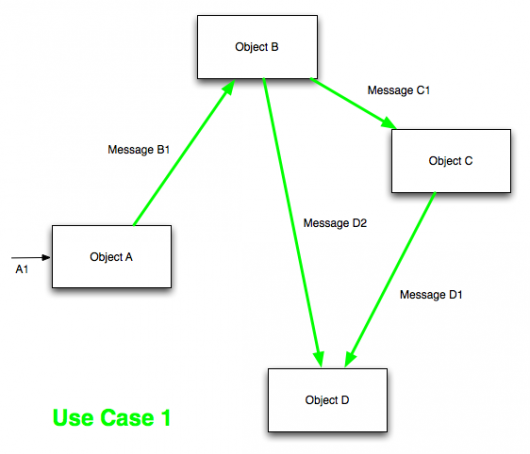
Developers frequently create deep, circular dependency chains between objects, assuming that more connectivity equals better data access. In reality, object-centric systems perform best when relationships are explicit and minimal. Excessive linking creates a "spaghetti" state where updating one object triggers cascading failures across unrelated services. Keep connections flat and resolve complex queries at the application layer rather than in the database schema.
Ignoring state consistency
Object-centric designs rely on the assumption that an object’s state is authoritative at any given moment. A common mistake is treating objects as passive data bags while managing their state externally in global variables or separate service layers. This split-brain approach leads to race conditions and stale data. Ensure that all state mutations happen within the object’s own methods or a clearly defined transaction boundary.
Treating objects as static data containers
Some teams implement object-centric architecture by simply wrapping SQL tables in classes, adding no business logic. This defeats the purpose of the pattern, which is to encapsulate behavior with data. Objects should enforce their own invariants. If an object can exist in an invalid state, the architecture has failed. Move validation logic inside the object definitions.
Checklist for validation
Before deploying, verify that your object model avoids these traps:
-
Relationships are shallow and explicitly defined, not implicit or circular.
-
State mutations are contained within the object or a single transaction.
-
Business logic and validation live inside the object, not in external services.
-
Objects are immutable where possible to prevent accidental side effects.
Frequently asked: what to check next
How is object-centric architecture 2026 different from traditional microservices?
Traditional microservices often rely on shared databases or rigid service boundaries, creating bottlenecks in real-time personalization. Object-centric architecture 2026 treats data as independent, self-contained units. This allows for granular access control and parallel processing, significantly improving scalability. By decoupling state from services, systems can update personalized user experiences without locking entire databases.
What role do objects play in database design for real-time systems?
In this model, the object is the fundamental unit of storage and state. Every resource, asset, or piece of data on-chain is an object. This shifts database design from relational tables to object graphs. Developers can query and update specific user preferences or assets directly, reducing the latency associated with complex joins and enabling instant personalization updates.
Can object-centric architecture handle high-frequency user interactions?
Yes. By treating objects as independent entities, systems can process transactions in parallel rather than sequentially. This parallelism is critical for 2026’s real-time demands, where user interactions—like clicks, views, or purchases—must be reflected instantly. Sui, for example, uses this object-centric design to achieve high throughput, making it suitable for applications requiring immediate state changes.
Is object-centric architecture only for blockchain projects?
While prominent in blockchain (like Sui), the principles apply to broader distributed systems. The core idea—managing state through independent, versioned objects—can enhance any system needing fine-grained concurrency. However, blockchain implementations add cryptographic verification and decentralized consensus, which are specific to on-chain object models.
How does this architecture impact developer experience?
Developers interact with objects as first-class citizens, simplifying state management. Instead of managing complex service-to-service communication for data consistency, they manipulate objects directly. This reduces boilerplate code and makes debugging easier, as each object’s state is self-contained and traceable.
No comments yet. Be the first to share your thoughts!