

The end of the microservice bottleneck
Microservices solved the problem of deployment scale, but they created a new one: data fragmentation. When a system is split into dozens of independent services, each managing its own database, the cost of keeping that data consistent rises exponentially. This is the microservice bottleneck. In complex data environments, the overhead of distributed transactions and eventual consistency often outweighs the benefits of independent scaling.
Object-centric architecture addresses this by treating data as first-class entities rather than byproducts of service boundaries. Instead of forcing services to coordinate state through rigid APIs, this approach groups related data and behavior into cohesive objects. These objects manage their own integrity, reducing the need for complex cross-service synchronization.
Consider a typical e-commerce order. In a microservice setup, the order service, inventory service, and payment service must coordinate via message queues or distributed locks. A single failure in one service can leave the order in an ambiguous state. With an object-centric model, the order is a single, self-contained entity. Its state transitions are validated internally, eliminating the need for external coordination mechanisms.
This shift is not just about code organization; it is about causal representation. Research into object-centric architectures shows that they enable more efficient causal representation by disentangling object properties through weak supervision. This means the system can better understand the relationships between data points, leading to more predictable and maintainable behavior.
The transition requires a change in mindset. Developers must stop thinking about services as isolated silos and start thinking about objects as the primary unit of work. This approach reduces the complexity of distributed systems by minimizing the number of moving parts that need to be coordinated.
How object-centric architecture works
Traditional deep learning models often struggle to separate an object from its environment, treating the entire scene as a single, undifferentiated blob of data. Object-centric architecture solves this by forcing the model to identify and isolate individual entities within a scene. It achieves this through a mechanism called weak supervision, where the system learns to disentangle object properties without needing pixel-perfect manual annotations for every single item.
The core engine of this disentanglement is sparse perturbation. Instead of showing the model millions of static images, the architecture applies random, minimal changes—such as moving one object or altering its color—while keeping the rest of the scene constant. By observing how the model's internal representation shifts in response to these isolated changes, the system learns which features belong to the object itself and which are merely part of the background. This approach is significantly more data-efficient than methods that rely on dense Euclidean encoding, as it requires far fewer perturbations to achieve robust separation.
This process moves the model from simple pattern recognition to causal representation. Rather than just correlating pixels, the architecture builds a structured understanding of cause and effect: if I move the cup, only the cup's position changes, not the table's texture. This allows the system to generalize better, reasoning about objects independently of their context.
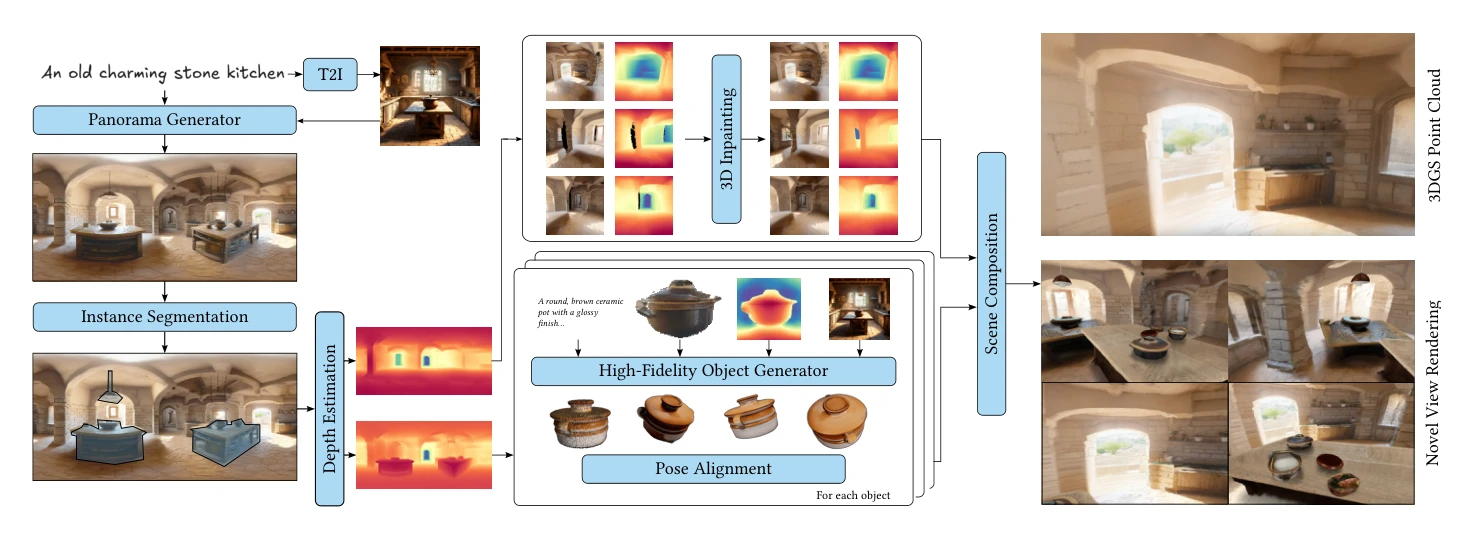
The result is a more interpretable and efficient neural network. By focusing on sparse, targeted changes, the architecture avoids the noise and redundancy inherent in Euclidean approaches, leading to faster training times and more accurate scene understanding.
Core mechanisms of object-centric learning
-
Weak Supervision
Learns from sparse, indirect signals rather than dense, pixel-level labels, reducing annotation costs. -
Sparse Perturbations
Applies minimal, isolated changes to objects to test and refine property disentanglement. -
Causal Representation
Moves beyond correlation to model independent object properties and their causal relationships.
Microservices vs object-centric design
Microservices and object-centric architectures solve different problems. Microservices optimize for independent deployment and team autonomy. Object-centric architectures optimize for data coherence and query efficiency. The choice depends on whether your bottleneck is operational complexity or data access patterns.
Operational Complexity
Microservices fragment data across boundaries. Each service owns a specific domain, requiring distributed transactions and eventual consistency. This increases operational overhead significantly. Teams must manage network latency, service discovery, and failure isolation.
Object-centric architectures keep related data together. By modeling systems around persistent objects, queries remain local. This reduces the need for complex distributed coordination. The system behaves more like a traditional database, but with the flexibility of modern object-oriented design.
Data Efficiency and Scaling
In microservices, retrieving related data often requires multiple API calls or a saga pattern. This creates "chatty" interactions that degrade performance under load. Scaling requires replicating entire services, even if only a subset of data is hot.
Object-centric designs enable efficient data retrieval. By keeping object graphs intact, you avoid the join explosion common in relational databases or the network overhead of microservices. Research indicates that object-centric approaches can reduce the multi-object problem to single-object disentanglement, improving query performance.
Comparison Overview
The following table summarizes the trade-offs between these two architectural styles.
| Metric | Microservices | Object-Centric | Best For |
|---|---|---|---|
| Data Coherence | Low (distributed) | High (local) | |
| Scaling Granularity | Service-level | Object-level | |
| Operational Overhead | High | Low | |
| Query Performance | Variable (chatty) | Consistent | |
| Team Autonomy | High | Moderate |
Real-world data mesh implementations
By 2026, the shift from microservices to object-centric architecture is no longer theoretical. Domain-oriented data meshes are now standard in large-scale systems, where data ownership is decoupled from monolithic warehouses. This approach treats each domain as a self-contained service with its own data schema, reducing cross-service coupling and improving scalability.
A practical example is seen in computer vision systems that rely on object-centric representations. Instead of processing raw pixels, these systems isolate and track individual objects across frames. This method, discussed in recent CVPR tutorials, allows for more efficient learning and generalization, even with limited architectural priors. The result is a system that understands context without needing exhaustive training data.
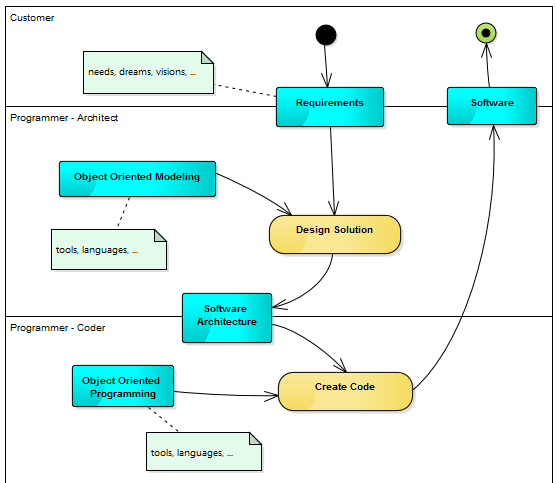
The visual topology of these implementations often resembles a network of interconnected nodes, each representing a domain. This structure is not just a diagram; it reflects the actual flow of data and control in modern software architectures. By aligning code structure with business domains, teams can iterate faster and deploy changes with greater confidence.
For those exploring this topic, resources like the NeurIPS tutorial on object-centric learning provide deeper insights into the technical challenges and solutions. These implementations demonstrate that the future of software architecture is not just about breaking things down, but about organizing them around meaningful, autonomous units.
Common Pitfalls in Adoption
Implementing object-centric architecture often reveals a gap between theoretical elegance and engineering reality. While the promise of modular, object-aware models is compelling, the path to production is littered with structural dependencies that can stall progress.
The most significant hurdle is the reliance on strong architectural priors. As noted in recent NeurIPS research, many object-centric learning methods require custom-built components tailored to specific data types. This lack of generalizability hinders scalability, forcing teams to rebuild foundational layers for each new use case rather than reusing a unified framework.
Debugging object-centric systems introduces new complexities. When an object representation fails, it is often unclear whether the error stems from the encoder, the interaction mechanism, or the decoder. This opacity requires developers to maintain deep expertise in the underlying mathematical assumptions, increasing the cognitive load during maintenance and iteration.
No comments yet. Be the first to share your thoughts!